


What is a flâneuse?
According to the Cambridge Dictionary, a flâneuse (or flâneur if a man) is someone who “walks around not doing anything in particular but watching people and society.”
It’s hard to be neutral about this dynamic, determined, and internationally recognized former labor inspector, who was even the centerpiece of a TIME magazine feature in 2024.
Her supporters laud the plethora of bike lanes and greenery in what was once a car-polluted, asphalt capital.
Her detractors decry “an urban wasteland,” where traditional park benches were replaced with slabs of wood that rotted in the rain, and citizen gardeners were allowed to ‘privatize’ trees in the streets to create urban gardens that quickly turned into weeds. Paris cemeteries were also encouraged to promote biodiversity.
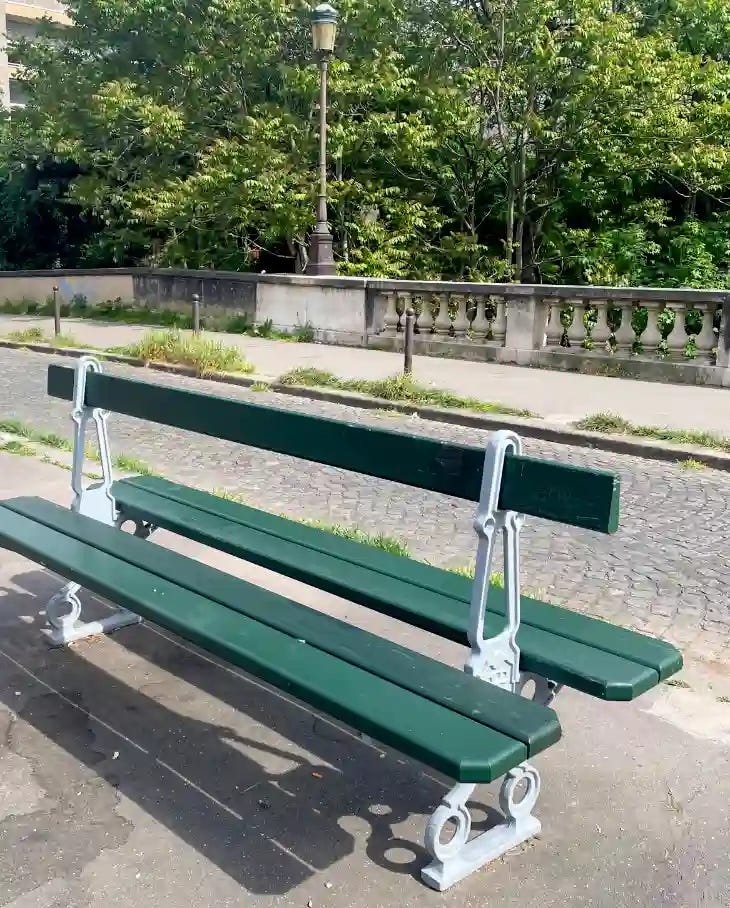
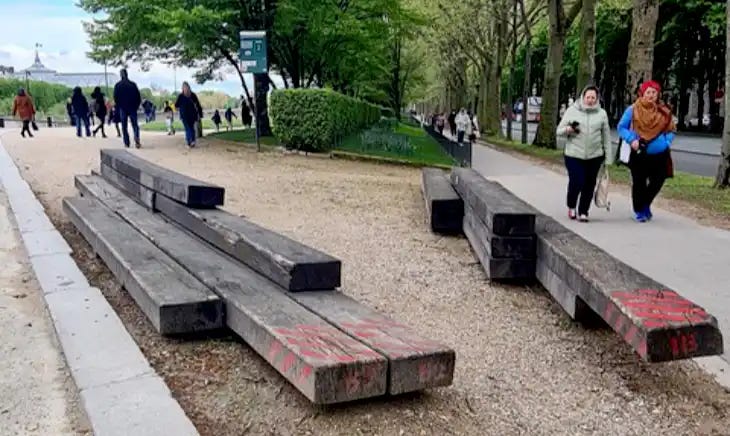
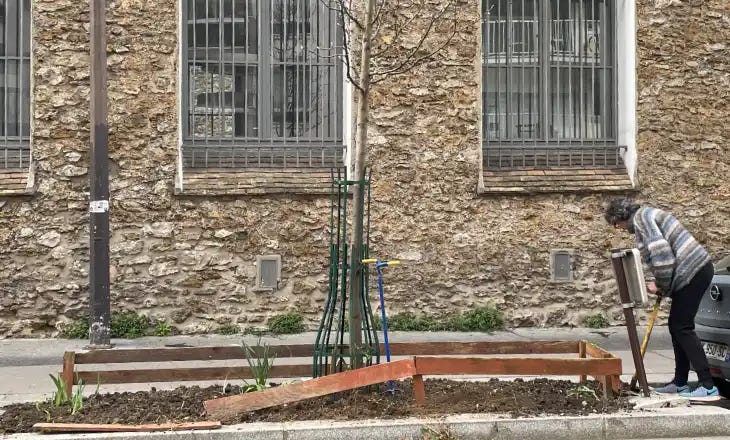
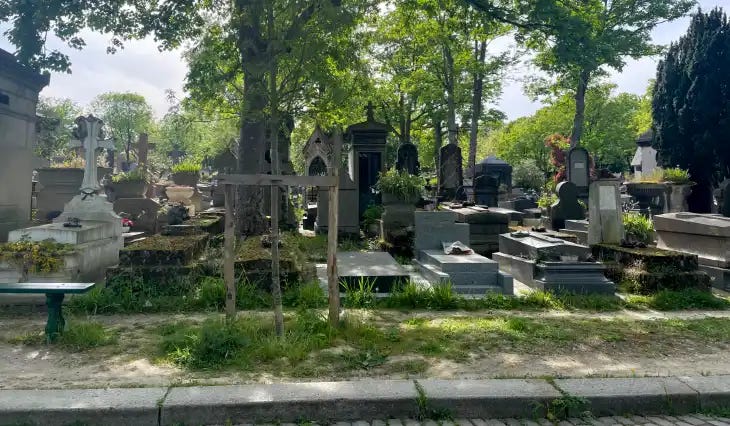
In 2021, an irate citizen created “#SaccageParis” (which can be loosely translated as “Trashed Paris”), an online movement that no doubt contributed to the withdrawal of several unpopular initiatives.
Mayor with a Mission
When Hidalgo became Mayor in 2014, Paris was a very different city. Cars were legion, dominating now-pedestrianized areas and occupying parking places that have since been repurposed. Dedicated lanes for cyclists were rare and, aside from the capital’s famed parks, so were green spaces.
Hidalgo’s plan was simple: transform polluted, car-engorged Paris into an urban paradise of greenery where Parisians could ride their bicycles, breathe fresh air, and even swim in the Seine. True to her word, a 1.4-billion-euro clean-up was launched before the Olympic Games. Some athletes fell ill but it was never clearly linked to the Seine waters. The good news is that no one died.
Paris Mayor Anne Hidalgo kept her pledge to swim in the Seine ahead of the 2024 Olympic Games [video © Le Monde]
Cars Out, Bikes In, Pedestrians in Peril
Speed limits on the périphérique (ring road) were lowered, designated areas for limited- or no-traffic sprang up (despite protests from some shopkeepers), and streetside parking places were converted to spaces for bikes or mini gardens. In short, Hidalgo got her way: even diehards like my Parisian sister-in-law, who claimed she had never taken a bus or metro in her life, surrendered.
Pedestrians and bicyclists weave their ways crossing rue St Antoine in the Marais district [video © Shellie Karabell]
But by putting drivers on bicycles, Hidalgo managed to put pedestrians at risk in her game of change. Crossing the street has become a game of chicken, with those on foot having to dodge hordes of cyclists who blithely ignore traffic lights, pedestrian crossings, and other rules of the road designed to keep accidents to a minimum. (Cyclists, meanwhile, complain about a lack of respect for cycle lanes).
Change for the Sake of Change?
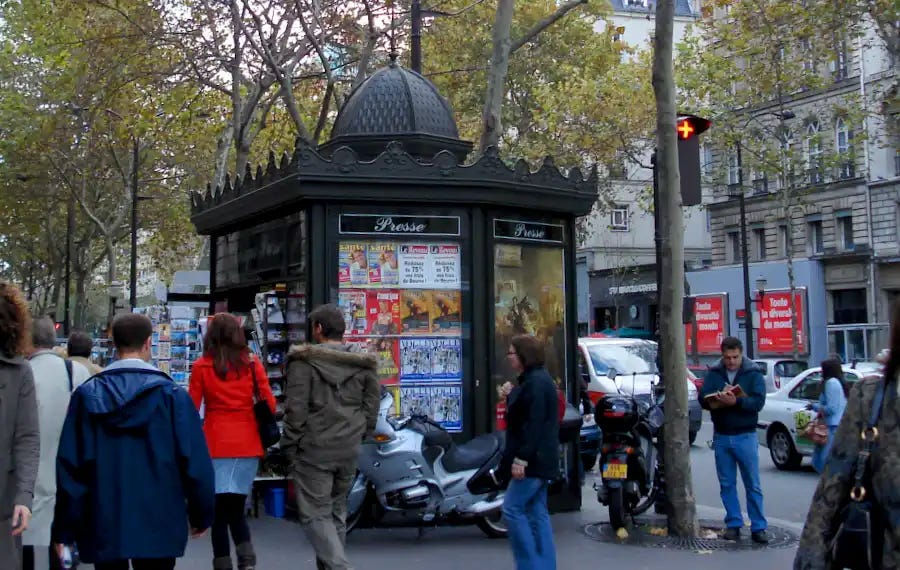
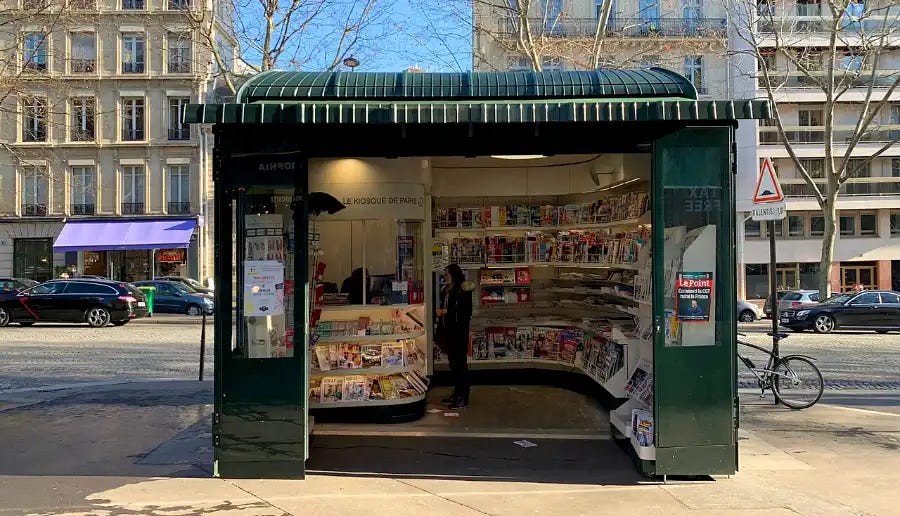
Still, other changes were clearly a case of “good intentions paving the road to hell.” Take those charming 19th-century-style newspaper kiosks with their domes and friezes: 360 were dismantled, purportedly for the good of the vendors who would gain amenities such as heating and toilets. Maybe some did, but not all.
I recently interviewed a couple of vendors in their “new” quarters. When I asked one if he was more comfortable now, he burst out laughing and tapped on the flimsy wall behind him. “No heating in here, no toilet. Those metal plaques would go down in a minute,” he scoffed. “De la m---e.”
When All is Said and Done
So, what is Hidalgo’s legacy? On the positive side, she turned the car-clogged banks of the Seine into a haven for pedestrians, joggers, and cyclists, and decreased traffic significantly across the city (according to this recent report in Time Out, it fell by half between 2002 and 2023). Apparently, air pollution has decreased substantially, too, though some days it’s hard to tell. There are now many more places to sit amidst trees and cool off.
On the negative side, Paris is still not exactly what you would call a “clean city.” Parisians compete with bicycles for right-of-way at pedestrian crossings and regret the traditional landmarks that were whisked away in the name of modernity. Some hope that her successor, Emmanuel Grégoire, also a Socialist, will continue her policies. The ones who didn’t vote for him pray that he won’t.

Couldn't agree more about Paris being a perfect place to visit and to stroll. Now if pedestrians could just do that without fearing for their lives as they try to cross the street it would be wonderful!
Thank you for explaining the changes that Mayor Hidalgo has endorsed and for your candid conclusions. I have noticed the increase in cyclists whizzing right through signals and the disappearance of scooters on the sidewalk. It will be interesting to see how Paris is guided into the future. While the City of Light may not be perfect, it certainly provides a feast of perfect places to visit!