

BARCELONA: Attacking Congestion Directly
Population: 1.7 million

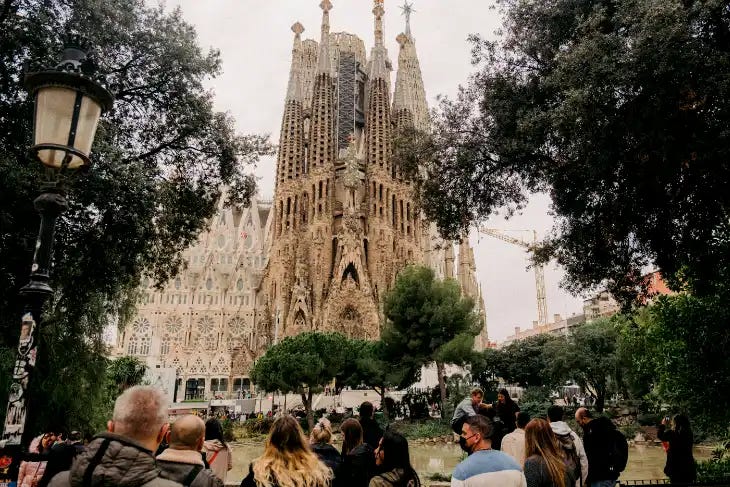
Barcelona remains one of Europe’s most visited cities, welcoming tens of millions of tourists in recent years. In 2025 alone, it received 16 million visitors – up 2.9 percent compared with the previous year – a figure that is not far off ten times that of the local population. It’s no wonder then that the city has seen some very vocal anti-tourism protests.
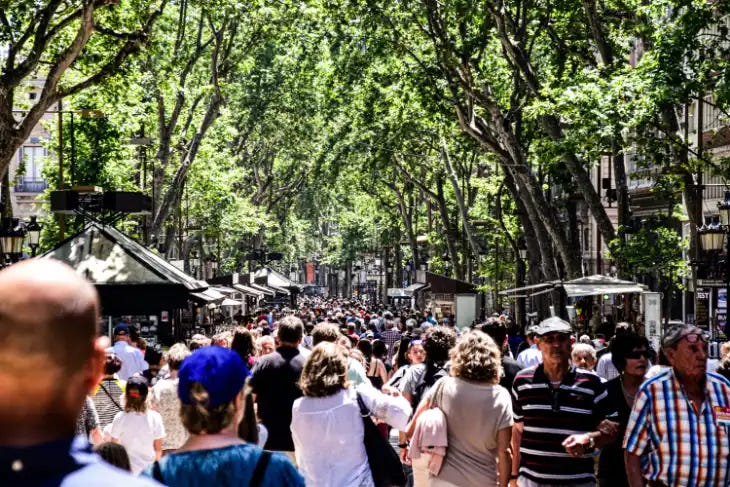
These days, however, officials increasingly talk about shifting from more tourism to better-managed tourism, with stricter controls on short-term holiday rentals and cruise traffic. Furthermore, with overtourism being blamed for increased housing costs, crowded public spaces, and the changed character of some neighborhoods, such as La Rambla and La Boqueria, Barcelona is taking a more aggressive approach than that of many other European cities.
Barcelona’s main overtourism measures are directed squarely at tourists:
Reducing Short-term Tourist Apartments
The city plans to rescind licenses for roughly 10,000 tourist apartments by 2028, and intends not to renew permits for short-term rentals, effectively ending most legal Airbnb-style tourist flats within the city.
Officials say this is meant to return housing stock to residents and ease rent pressure. The policy recently received legal backing from Spain’s Constitutional Court.
Raising Tourist Taxes Sharply
Barcelona increased its tourist taxes sharply this spring and now has some of the highest in Europe. At the top end of the scale, those staying in five-star hotels will now pay €12 per person per night – with tourist taxes for other accommodation on a sliding scale – and rates are expected to increase further over the next few years. The city says part of the revenue is being directed toward affordable housing and city services affected by tourism pressure.
The taxes apply to:
Hotels
Hostels
Tourist apartments
Cruise passengers
Restricting Cruise Tourism
The city has identified cruise passengers – especially day-trippers who spend only a few hours in Barcelona – as a major source of congestion.
Measures include:
Increasing taxes on cruise passengers.
Prioritizing cruises that begin or end in Barcelona over ships that simply stop for a few hours.
Reducing cruise terminal capacity.
Notably, Barcelona and the Port Authority have agreed to reduce the number of cruise terminals from seven to five over the coming years.
Creating a “Sustainable Tourism” Strategy
The city recently appointed its first commissioner for sustainable tourism. José Antonio Donaire’s mission is not to increase visitor numbers but to reshape tourism by:
Encouraging longer stays.
Attracting more business and cultural travelers.
Discouraging low-spending mass tourism.
Limiting disruptive activities such as organized pub crawls.
Restoring local-focused commerce to heavily touristed districts.
In summary, Barcelona is not trying to end tourism, but officials are becoming increasingly focused on moving from more tourism to better-managed tourism, with stricter controls on housing and cruise traffic.