


Evening commuters pick their way home through broken concrete and piles of rusty earth abutting the Canal Saint-Martin in northern Paris. A heavy-duty excavator idles nearby.
Quai de Valmy was once abuzz with cars and delivery vans. Now, this artery is making way for tree-lined flower beds and bike lanes, amid a broader urban overhaul underway inside and outside the French capital.
“It’s noisy and it’s dirty,” says Guy Biazo, who manages a clothing store next to the construction. “It’s not pretty, especially when it rains. But I’m for it, if it improves the neighborhood.”
For more than a decade, Paris and its suburbs – together referred to as Le Grand Paris or Greater Paris – have seemed like one giant construction site, in a bid to unlock transportation connectivity and urban development, fight pollution, and create a greener, more livable region able to withstand a climate-changed future.
Particularly ambitious is a massive infrastructure project, one of Europe’s largest, now underway in Le Grand Paris. At the heart of this is a major expansion of the metro network with new links being created between the often-gritty multiethnic towns in the banlieues (suburbs) ringing the capital. The Grand Paris Express, as it is known, aims to break down barriers between the city and its outskirts – places where Paris historically exported what it didn’t want, like sewage.
For some, today’s public works inside and surrounding the capital reach the scale and ambition of the 19th-century urban revolution orchestrated by Baron Georges-Eugène Haussmann and his boss Napoleon III. Their famed transformation of Paris contributed to much of the city we know and love today.
“It’s not the Haussmann revolution in Paris – it’s a revolution of a larger territory,” says Paris Municipal Councilor Maud Lelièvre, who also heads the French chapter of the International Union for Conservation of Nature (IUCN), reflecting on the raft of development projects across Greater Paris. “It changes the lives of a lot of people, giving them proximity to the capital.”
But the overhaul, especially within the capital, is also earning sharp pushback.
“Haussmann respected and showcased Paris,” says Patrice de Moncan, an urban historian and Haussmann expert. “Today, things are being broken – and that’s what depresses me.” Still, he hails the revamp of Greater Paris, with triple the capital’s population, as “frankly interesting.”
In the Steps of Haussmann?
The urban upheaval nearly two centuries ago was also deeply controversial. Launched in 1853 – shortly after France’s first president, Louis-Napoléon Bonaparte, became emperor – it amounted to a sea change for a crowded, insalubrious metropolis recovering from another revolution.
That 19th-century uprising saw the city’s trees chopped down and burned for firewood – but that wasn’t the only blight. “Paris was essentially a medieval city ravaged by cholera,” says de Moncan of the epidemic that killed thousands. “They didn’t know where to bury the dead. So, they threw them in the Seine river.”
Recognizing the urgent need for action, Napoleon III recruited Haussmann, a provincial administrator, as prefect of the Seine department then encompassing Paris. Next, he tasked his new protégé with a massive experiment.
“He told Haussmann to give the people of Paris air and water,” de Moncan says. “They were the biggest-ever public works in a city that continued to live – and also enriched itself.”
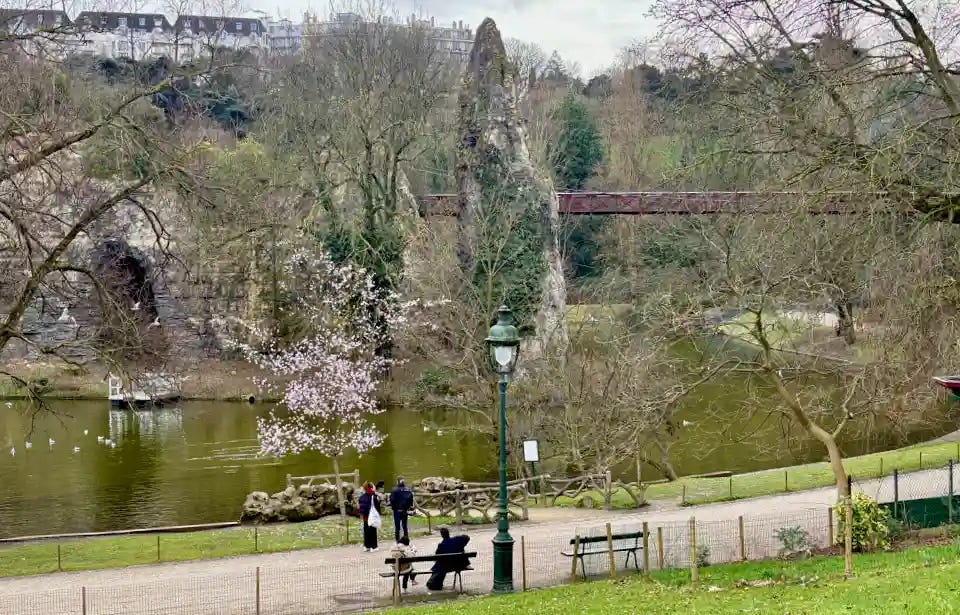
Narrow streets and decrepit slums were gutted and replaced with wide avenues and uniformly designed cream-colored buildings. Haussmann also upgraded or created new parks, including the Bois de Boulogne to the west and the Bois de Vincennes to the east, as well as the Buttes-Chaumont in the northeast – which transformed a grimy wasteland that once hosted the royal gallows.
Paris expanded, doubling its population and annexing suburban communities into eight new arrondissements, or neighborhoods. It became cleaner and greener, with a modern sewage system, potable water, and thousands of trees.
But government opponents blamed Haussmann for poor planning, skyrocketing costs, and alleged financial mismanagement. Napoleon ultimately dismissed him.
“It was a political criticism,” de Moncan says. “Rather than focus on the emperor, they targeted Haussmann.”
Napoleon III was deposed in 1870. Derided as “the demolisher,” Haussmann died in relative poverty, two decades later.
Now, many salute Haussmann’s accomplishments – even as the capital’s current transformation is in the crosshairs.
Growing Pains or Chaos?
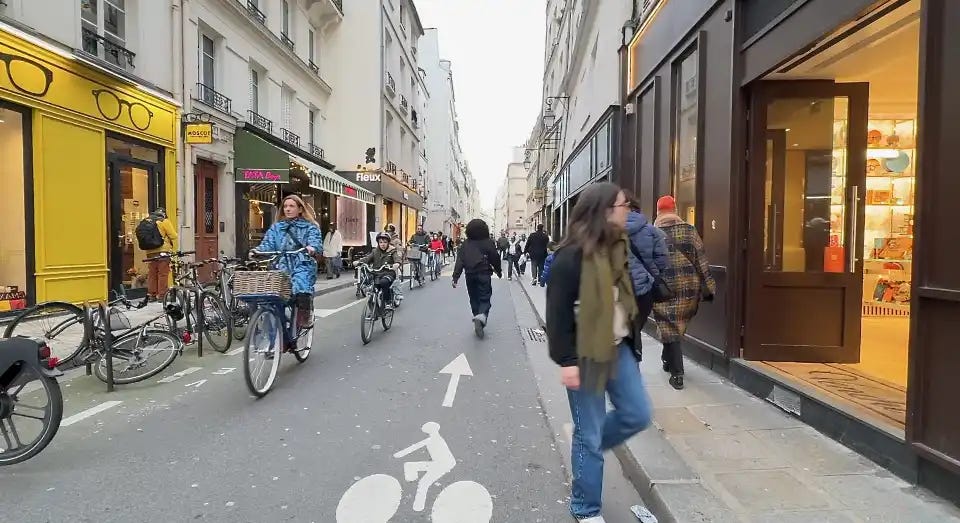
Over the past two decades, the capital’s City Hall has earned kudos internationally for its war on cars, cleaning up the Seine river, creating 1,000km of bike lanes, and planting thousands more trees to ensure one of Europe’s most densely-populated and heatwave-vulnerable cities can survive a changing climate. The 2024 Paris Olympics triggered some of the works, also leading to new housing and transport links.
More changes are to come, including a planned garden around the Place de la Concorde, where Louis XVI and his wife Marie-Antoinette were guillotined.
“It’s kind of like growing pains – it’s not that much fun, but then it will be over,” says Paris tour guide and author Rosemary Flannery of the renovations. “I still feel the essence of Paris. I can still take people around these adorable old winding streets in the Marais, and many other parts of Paris. I hope that will prevail.”
Another person who welcomes the developments is lawmaker Lelièvre, who authored a City Hall study on preparing Paris for a hotter future, though she has a few concerns, too. “I think there were some very positive advances, but we didn’t sufficiently address the revolution when it comes to climate,” she says. “We need more trees, more renovation, more air corridors, more fighting against heat islands.”
Others, however, have been scathing – pointing to the Toblerone-shaped Triangle Tower skyscraper that has been rising over the low-lying capital’s 15th arrondissement, and describing the city’s overhaul as poorly planned, superficial, and ugly.
“People worldwide say Paris is Paris because there’s a sort of unity,” says Christine Nedelec, president of SOS Paris, an association campaigning for the preservation of the city’s heritage. “But if you create chaos with constructions having nothing to do with each other, which have a shocking effect, the soul of Paris could be destroyed.”
A Bigger Paris
Nor has the Greater Paris project escaped criticism. In the works are 200km of new metro tracks, including four new lines and 68 stations, as well as pedestrian zones, climate-friendly buildings, and greener streets.


On a human level, improved transportation under the Grand Paris plan means individuals and companies can move into areas more compatible with their needs and budgets and still access the city center – and other banlieues. The stigma of residing in the suburbs is fading.
Businesses, art galleries, and high-profile brands such as the fashion houses Chanel and Hermès have bases there. Residents like journalist Rozenn Le Saint are also moving out of the capital, attracted by lower housing prices and new metro lines.
“We would have loved to remain in Paris, but the rents are too high,” says Le Saint, who bought an apartment in the working-class suburb of Aubervilliers. “We did check if the Grand Paris Express passed near us, even if it wasn’t our first criteria for moving.”
But some claim the Grand Paris overhaul favors concrete over the environment. And like the capital, it is a work in progress. Whether it will have the same transformative legacy as Haussmann’s Paris remains uncertain.
“It needs more planning so people cross borders,” Lelièvre says. “We’re not there yet.”

Very interesting article, thank you!
Great article!