

In Lebanon, in the former Palestinian refugee camps of Shatila and Bourj al-Barajneh in Beirut, Meike Ziervogel of Germany, Richard Verity of the UK, and Kadria Hussien of Syria are preparing the first class of students from the Alsama Project for their high school graduation. Some will go on to universities. Others will look for work. All are refugees.
“We started the school in 2020 with a class of 40 students in response to requests from young women who didn’t want to be forced into child marriage,” says Ziervogel, co-founder and CEO of Alsama. The name means “sky” in Arabic.
Most are refugees from neighboring Syria, birthplace of Alsama co-founder Kadria Hussien, herself a refugee from that country’s civil war. She has been working with young refugees in Lebanon since 2018. That’s when Ziervogel and her husband decided to up stakes in Europe and join her effort.
The European Asylum, Migration and Integration Fund (AMIF) has a €9.88 billion budget for 2021-2027 to support asylum systems, integration, and refugee reception.
“Kadria was married at 14 and had her first child at 16,” Ziervogel explains. “Her first aim was to provide basic education for girls [in similar situations], but the girls wanted more than just literacy and soon boys also began asking for schooling. They told us: ‘You can’t empower girls if you don’t empower us.’”
Building Brighter Futures
Today, Alsama teaches 1,200 students, mostly Syrians with some Lebanese and Palestinians; roughly 50:50 boys and girls, aged 11 to 18. Another 1,000 youngsters are on a waiting list. The school now has five centers, including one just opened in Homs, western Syria, in May. Alsama is registered in Lebanon and Syria as an NGO charity rather than a school. The annual $2.2 million budget is funded by donations rather than government funds.
The school’s curriculum was created by the teachers and students themselves. Students are accepted (or not) into universities via the G12++ exam designed for displaced youth (Ziervogel calls it “a curriculum-agnostic exam any student can take”) and launched in February 2026. The centers are accredited with the Western Association of Schools and Colleges (WASC).
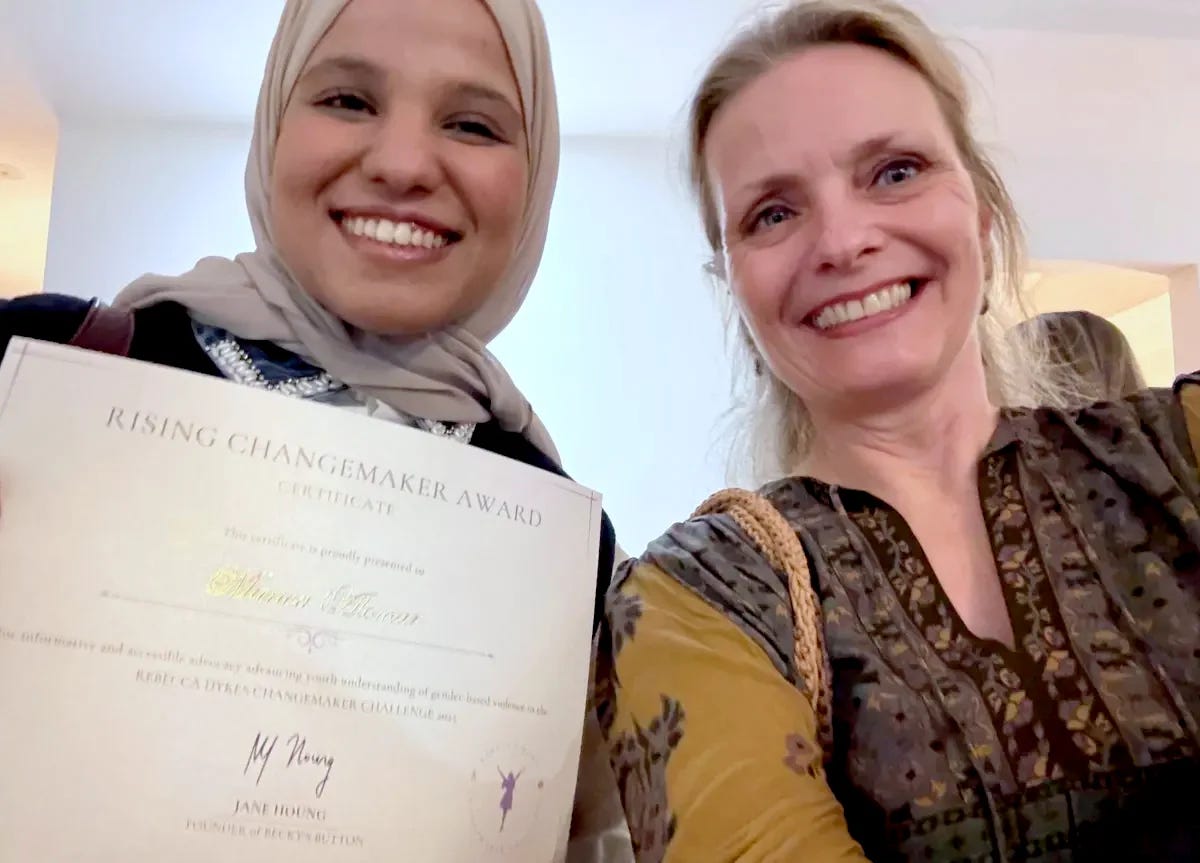
At the start, however, the education can be pretty basic. “Almost 90 percent of the children arrive without being able to read or write in their native language,” says Ziervogel. “Others might read at a second-grade level at age 14.” Students learn to read and write in their native language and English. Starting in the second year, all classes are taught in English. By the time they graduate, students can function in both their native tongue and English as well.
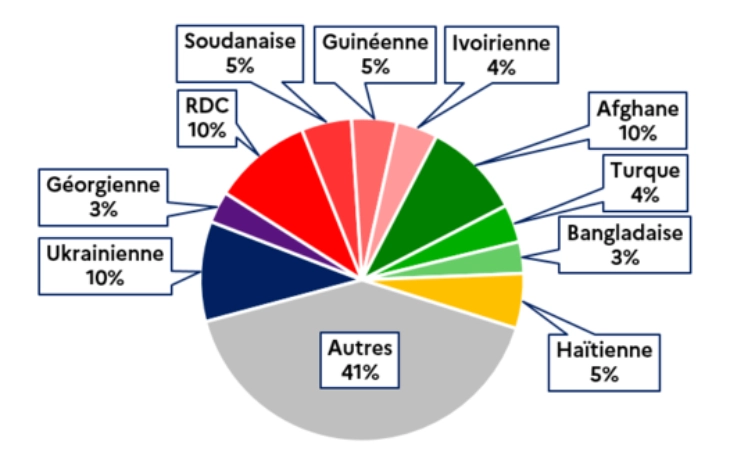
France spent €6-8 billion directly on refugees and asylum seekers from 2022-2024; in 2024 alone, total spending on refugees/asylum programs amounted to €2-3+ billion. In 2025, France’s refugee budget was cut by about €69 million, with programs such as AGIR (refugee integration support) being most affected.
But parents proved to be less than accepting of their children getting an education, as classes conflict with the local, traditional societal roles for boys and girls. “We teach parental diplomacy,” says Ziervogel, “so students can show their parents that education gives them tools to make their lives better. For example, learning math so Mom can’t be cheated at the market. And there is a kind of family pride when one of the children can speak English.”
Lessons Beyond Books
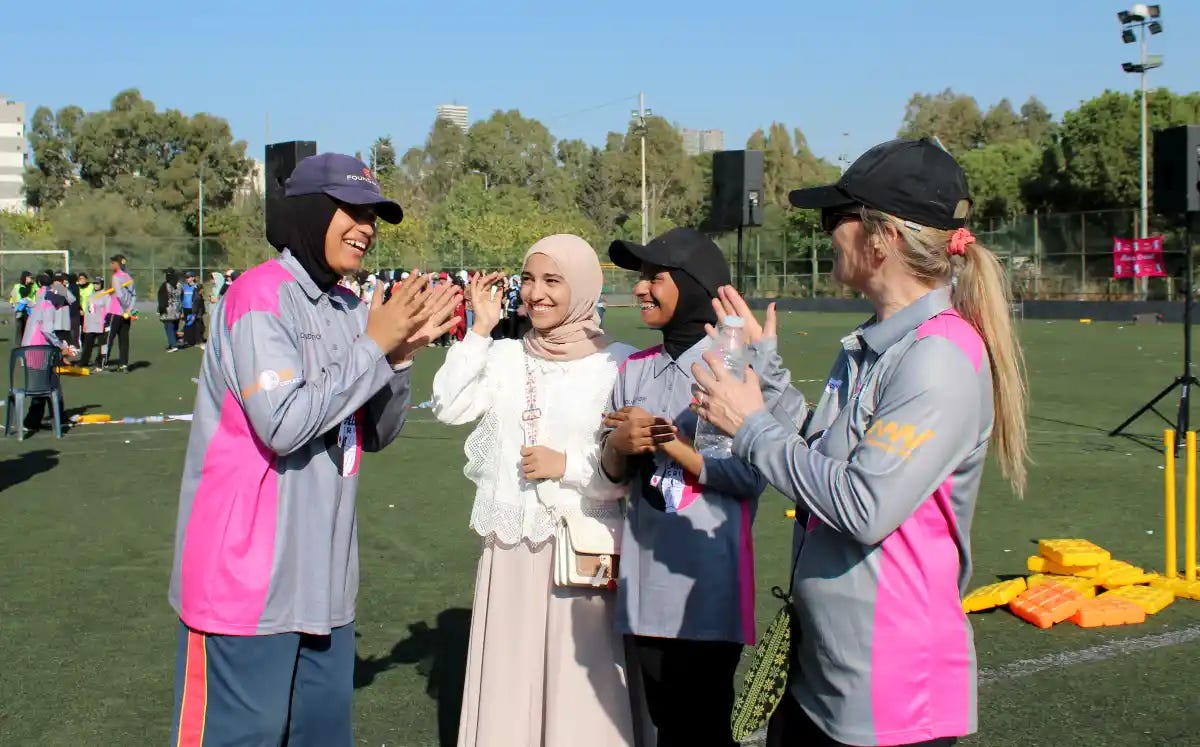
And then there’s sport: co-ed cricket, set up by Ziervogel’s British husband, Richard Verity, a cricket fanatic who founded a club in the Shatila camp as soon as the couple arrived in Lebanon in 2018. Today, Alsama Cricket is the largest refugee youth-cricket program in the Middle East. But why cricket?
“It’s not a violent sport,” says Ziervogel. “There’s no physical contact, so boys and girls can play together. It’s complicated, so you learn to play by the rules. It’s an international sport, so all types of people play it. And the girls actually play better than boys at ages 12 to13, so boys learn to respect them!”
There’s also some life advice – such as urging students to wait until they’ve finished their education, find a job, and then complete the proper paperwork before heading to foreign shores, where, as undocumented immigrants, they could face harsh punishments and deportation. “European countries are overwhelmed today,” says Ziervogel. “They just are not able to integrate everyone who wants to go there.” There’s also the hope that these students will eventually return to the region a few years after graduation to play a role in their country’s development.
Courage in Face of Adversity
But, meanwhile, hostilities in the Persian Gulf continue, and classes go on in the midst of it all, in the same camps where Palestinian refugees first huddled in 1948 and 1949, and faced massacres by Lebanese forces during the Israeli invasion of Lebanon in 1982.
“We’ve been through this before,” says Ziervogel, referring to Israeli bombings in 2024. “So, we know what to do. Each war makes us stronger. We can pivot.” When there’s no internet, classes are held via WhatsApp. “The students want to continue classes,” she says. “Their fear of losing classes is much bigger than their fear of war.”
However, as the war continues, residents are beginning to leave southern Lebanon to seek refuge in the north, and Ziervogel is looking to open new education centers in the region. She herself is staying on, despite continued hostilities.
“Friends and family wanted me to leave this year during the Beirut bombing,” she recalls. “But I refused. We operate in the Middle East. We must think of education in the long term, not as a six-month project. If I, as CEO, were to leave, what kind of message would that send?”
