
When a newly emboldened Donald Trump began his second term as US president last year, his return to the White House looked like a golden opportunity for far-right politicians in France, the rest of Europe, and across the globe. The world’s primary superpower was once again led by a man who shared their views about race, immigration, and crime, and who was demonstrating how it was possible to sweep aside, or even ignore, the laws and norms that would have constrained a more conventional president.
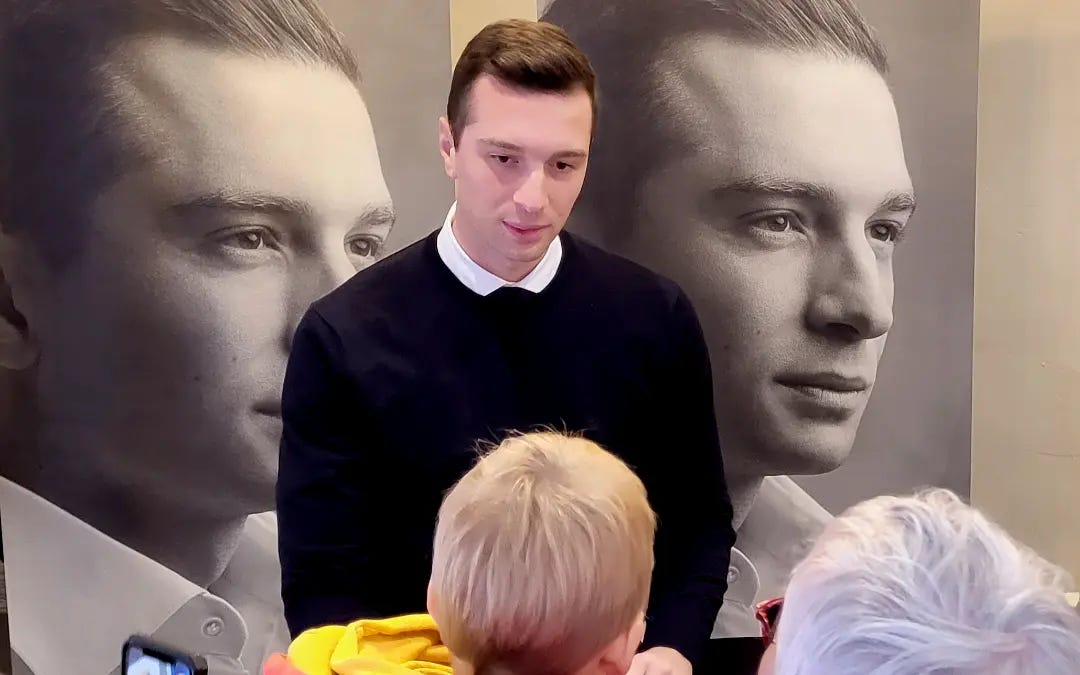
“I have a lot of respect and admiration for the patriotism of Donald Trump, for his will to defend the interests of his country first and above all,” Jordan Bardella, the 30-year-old leader of France’s far-right Rassemblement National (National Rally) party, said a few days after Trump took office in January 2025. He also praised Trump’s immediate expulsion of migrants and said his RN party was now a “privileged interlocutor” in international relations because like Trump’s US it favored “economic patriotism” and “the control of borders.”
The Far-Right French Facelift
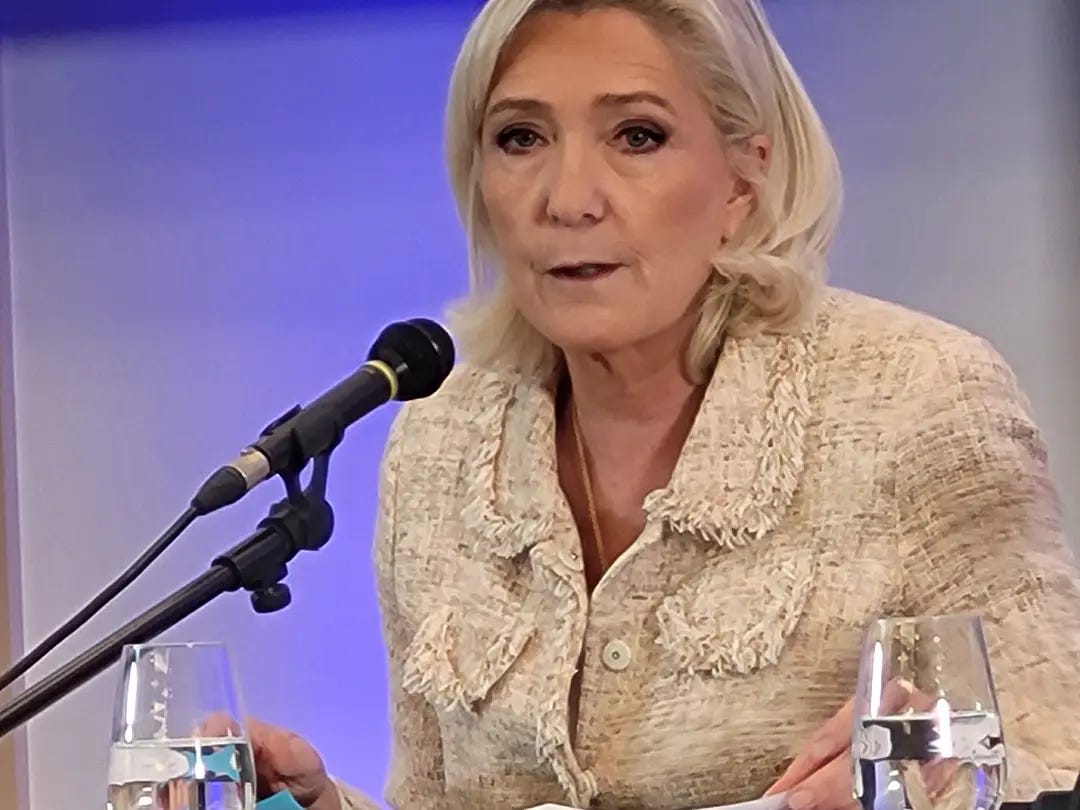
The French far right, first under Jean-Marie Le Pen (1928-2025), who co-founded the then-Front National in 1972, has been an important force in French politics since long before Trump was first elected a decade ago. Now led by his daughter Marine Le Pen and her young protégé Bardella, today’s renamed RN has successfully “detoxified” its reputation as a party of racists and antisemites to become, according to all opinion polls, by far the most popular party in France today – as well as the largest single party in the French National Assembly and one of the largest in the European Parliament. It does not want to throw away its hard-won current political advantage by being associated with an increasingly unpredictable and anti-European US president.
Opinion polls suggest that its candidates (it will probably be Bardella who stands for the presidency next year if Marine Le Pen is disqualified by the courts over the organized embezzlement of EU parliamentary funds) will win the Elysée presidential palace and take control of the assembly in 2027. In the March municipal elections, the RN and its allies won control of more towns and villages across France than it has ever done before, including Nice on the Côte d’Azur, even if it did not fulfil its hopes of wresting Marseille, the second-biggest city, from its Socialist rivals.
From the start of Trump’s second term, RN leaders have been anxious not to squander their political lead. Bardella has mixed his occasional praise for the US president with caution, and he insisted from the beginning that he was not a “little brother” of Trump – a revealing phrase that anticipated future attacks from the left over the far-right’s links to Trumpism.
Social Distancing
Bardella and Marine Le Pen formally congratulated Trump on his re-election, but they also ordered their MPs and MEPs (members of the French National Assembly and the European Parliament) to avoid effusive praise for the US president. A few weeks later, Bardella cancelled his planned appearance at CPAC (the Conservative Political Action Conference, a donor networking event for conservative candidates, in the US) after Steve Bannon performed what appeared to be a Nazi salute. Bardella wanted to ensure that the RN’s opponents were not given another opportunity to link the party to Fascists and Nazis.
Though France was among the first European countries to harbor a successful far-right party after the second world war, these days it is not alone: in the past few years, rightwing populists and nationalists, some with extreme views verging on neo-Nazism, have scored successes across the continent, including in the UK, where voters approved the nationalist Brexit project to leave the EU in 2016, and in Italy, where Prime Minister Giorgia Meloni leads Italy’s successful coalition government. The far right has done well even in western European countries thought to have been inoculated against fascism and extremism by their experiences before, during, and after WW2, namely Germany, Spain, and Portugal.
Problems in Far-Right Paradise
Trump loves these parties and politicians, but they do not all love Trump. Just over a year into Trump’s second term, the political risks immediately identified by Le Pen and Bardella – who, like Meloni, are among the most pragmatic politicians on the far right – are becoming ever more apparent.
Trump presents four big problems for the European far right.
First, he is aggressively anti-European, and the European far right are all Europeans; tariffs also hurt European voters – winemakers for example – as well as US consumers.
Second, he has shown himself to be sympathetic to Russia’s Vladimir Putin despite the Kremlin’s war to seize Ukraine, a very unpopular position among Europeans who fear they may be next in line for Russian aggression.
Third, Trump and Israel’s Benjamin Netanyahu have launched a highly destabilizing war against Iran that is likely to push up energy prices for European consumers.
Fourth, if Trump continues to trample over the rule of law at home in the US – provoking demonstrations and an explosive backlash from American voters of the sort already seen on the streets of Minneapolis – the politicians in Europe who have tied themselves too closely to the Trump brand will be discredited as a result of that association.
Suspicious of a superpower
This danger for the far right’s credibility from Trump’s actions is particularly acute in France. The French, from the far left through the center to the Gaullist right and the extreme right, have long been suspicious of the American superpower and its habit of riding roughshod over European wishes. In the French mind, Trump’s “riding roughshod” has now turned into outright contempt for European democracy and what used to be called the “rules-based international order.” In addition, US attacks in Venezuela and Iran have intensified crises for US-EU relations in the military, commercial, and diplomatic domains.
Charles Kushner, a convicted felon, and father of Trump’s son-in-law Jared, has appalled the French establishment since he was appointed US ambassador to France, most recently by interfering in French politics in support of a far-right French activist killed in a political brawl and then refusing to answer a diplomatic summons to the foreign ministry for a dressing down. For a politician like Marine Le Pen who presents herself as a loyal French republican with respect for the law and French institutions, and who is trying to win over French voters from the right and the center to add to her far-right base, it makes no sense to be seen to be close to Trump or his style of governing.
The RN, starting with Jean-Marie Le Pen and continuing to the present day with Jordan Bardella, have mostly kept their distance from the US and with the Trump administration, and are likely to continue to do so to ensure that their path to electoral victory in 2027 is not blocked by an inconvenient association with a US leader who appears to the rest of the world to be increasingly unhinged. Just past the one-year mark of the second Trump presidency, the advantage of being Washington’s political bedfellow is waning.

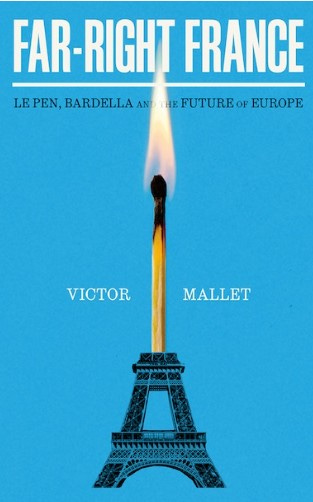
Victor Mallet is an author and foreign correspondent, who has worked for many years in Africa, Asia, the Middle East and Europe for Reuters and the Financial Times, where he was previously Paris Bureau Chief and is now a Senior Editor. His latest book, published in February is Far-Right France: Le Pen, Bardella and the Future of Europe (Hurst). Victor is a member of the Anglo American Press Association of Paris.