



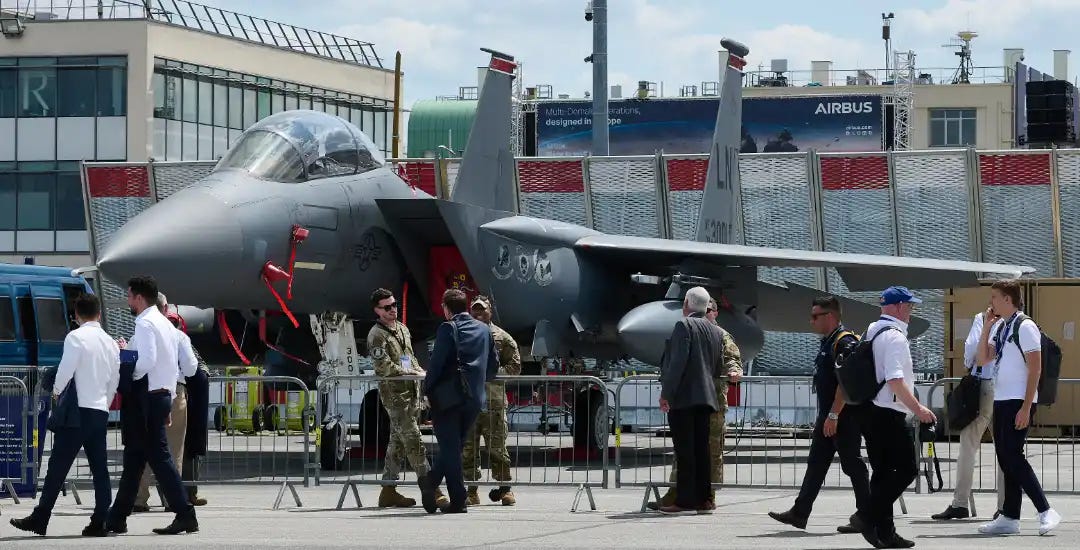
Months before the US-Israeli attack on Iran, the US was seen increasingly in Europe as a doubtful ally, no longer trustworthy. Conflicting statements from the White House and Iran itself have to date done nothing to change that perception.
Back in December, Munich security chairman Wolfgang Ischinger told Deutsche Welle at the agency’s conference, “Obviously, trust has been damaged. Think of Greenland.”
The lynchpin to decoupling came the following month around the time of the Davos global economic summit, when Trump renewed his bellicose overtures, suggesting he might seize Greenland, an autonomous region of the Kingdom of Denmark, by force.
“Greenland was the turning point,” says INSEAD political science Professor Emeritus Douglas Webber, a specialist on the European Union, speaking to Reporting from Paris. “There had been tensions between the EU and the US previously, but there was never a question of one NATO state invading another. This was when Europeans realized they could no longer rely on the US as they did during and after the Cold War.”
It wasn’t just Europeans who were shocked. Canadian Prime Minister Mark Carney, a former Governor of the Bank of England, was surprisingly blunt in his Davos speech. “Call it what it is – a system of intensifying great power rivalry, where the most powerful pursue their interests, using economic integration as coercion,” he said. Europe, he continued, was among “the countries that have the most to lose from a world of fortresses and most to gain from genuine cooperation.”
A History of Blah-Blah
Europeans have been talking about separating from the US on defense for decades. In the 1980s, French President François Mitterrand and German Chancellor Helmut Kohl agreed on the need to establish a European defense independent of the US.
“They realized that in the next few decades, there would be fewer Americans of European ancestry,” Professor Webber continues. “Europe would become less important, while Asia would become more dominant. So, they made a start – peacekeeping in Mali, a small force in Bosnia during the Civil War in the former Yugoslavia – but a planned rapid-reaction force of 60,000 soldiers never materialized.”
Today, with wars in Ukraine and Iran, China extending its reach as an economic and military power, and increasingly aggressive American actions abroad, Europe’s pursuit of strategic autonomy has never appeared more pressing… or evident. And circumstances are now showing the White House that the tenets of allied support and common interest work both ways: Gulf and European countries flat out declared their disinterest in becoming involved in the Iran war. Weeks after the February 28 attack, the Trump administration’s calls for support in its war in Iran remain largely unheeded.
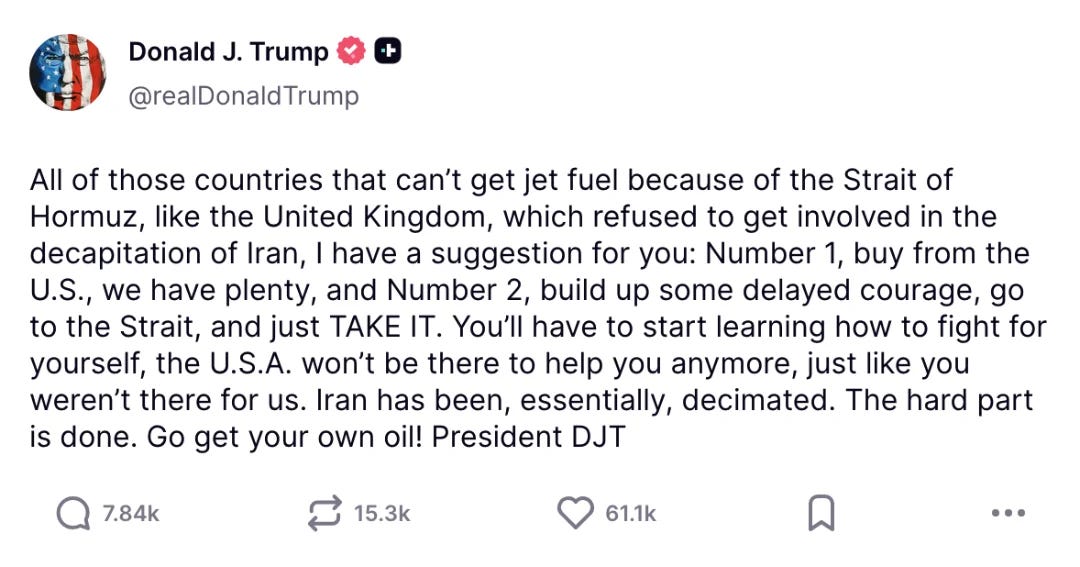
A New Turning Point?
“Polls show that most Europeans think the Iran war was not a good idea, and they would be outraged if their governments deployed troops to send their sons to be killed,” Professor Webber says. French former general and senior NATO officer Michel Yakovleff was unusually outspoken: “Joining Trump’s coalition today is like buying a ticket to dinner and dancing on the Titanic the evening after it hit the iceberg.”
European leaders were equally determined in their resolve to stay out of the war in Iran. Instead of joining the US-Israeli military action, European nations aligned to defend their interests and allies in the region.
EU Foreign Policy Chief Kaja Kallas: “Nobody is ready to put their people in harm’s way in the Strait of Hormuz. We have to find diplomatic ways to keep this open.”
German Defense Minister Boris Pistorius: “What does Trump expect from a handful of European frigates that the powerful US navy cannot do? This is not our war. We have not started it.”
UK Energy Secretary Ed Miliband: “Ending the conflict is the best and surest way to get the strait reopened.”
French President Emmanuel Macron: “France is ready to escort ships and tankers in the Strait of Hormuz once the situation is ‘calmer,’ but that mission must be entirely separate from the ongoing war operations and bombings.”
France sent its nuclear-powered aircraft carrier, Charles de Gaulle, escorted by its carrier strike group, to the Eastern Mediterranean to provide a defensive shield for allied nations around the Gulf, while the UK deployed a Royal Navy destroyer, HMS Dragon, to the Mediterranean. And on March 19, the UK published on its website a statement announcing they would join a coalition of some 30 countries in efforts to secure passage through the Strait of Hormuz.
On the financial side, French prime minister Sébastien Lecornu announced March 25 an extra €8.5 billion of military budget to build more weapons, including ground-based air defense missiles and anti-drone systems. Lecornu, himself a former defense minister, also mentioned a plan to create public-private companies to order and stockpile weapons built in Europe to allow France, allied nations, and export clients to order effectively off-the-shelf without a lengthy wait.
Guns and Butter
While the need for an independent European defense seems to be broadly accepted, decoupling goes beyond producing armaments. Unraveling more than 70 years of post-World War Two defense pacts is not simple. “Even when Europe has been united, for instance, in supporting Ukraine in its defense against the Russian invasion, it has done so under Washington’s leadership,” the director of Carnegie Europe, Rosa Balfour, wrote in an op-ed in the French afternoon daily, Le Monde. “This dependence on the US goes beyond material relations. It is deeply rooted in the European mindset.”
Those concerns have fueled political and military discussions about the need for a stronger, more united, European Union. But a unified EU defense sans the US comes with a pretty hefty price tag, one which will be borne by taxpayers of the member states, who are now also facing rising energy costs directly related to the US-Israel actions in Iran. This big concern goes beyond defense. To quote an advisor to former US president Bill Clinton during his 1992 US presidential campaign, “It’s the economy, stupid.”
European nations in NATO, under pressure from the Trump administration, have agreed to raise core defense spending to 3.5 percent of gross domestic product (up from 2 percent), with a further 1.5 percent to be spent to improve roads and ports for military use, cybersecurity, and energy pipelines. Spain has held out, sticking to its 2.1 percent target, which Prime Minister Pedro Sánchez insists meets its capability targets for the forces. That comes at a cost to taxpayers.
“Tax increases or cuts in services will not go down well with Europeans,” continues Professor Webber. “They are attached to their welfare state that provides for medical costs, pensions, etc. Europeans are not accustomed to paying for defense; not just arms but military satellites, or information collection via technology.”
Indeed, an opinion poll by ING Bank Consumer Research shows little public support for that fiscal boost for military means in six nations – Belgium, Germany, the Netherlands, Poland, Romania, and Spain. Nearly three-quarters – 72 percent – of respondents see higher military spending hurting their own spending power with inflation, cuts in social services, and tax hikes. Less than a third of poll respondents thought they stood to gain from spending increases for the military.
Infighting for Funding
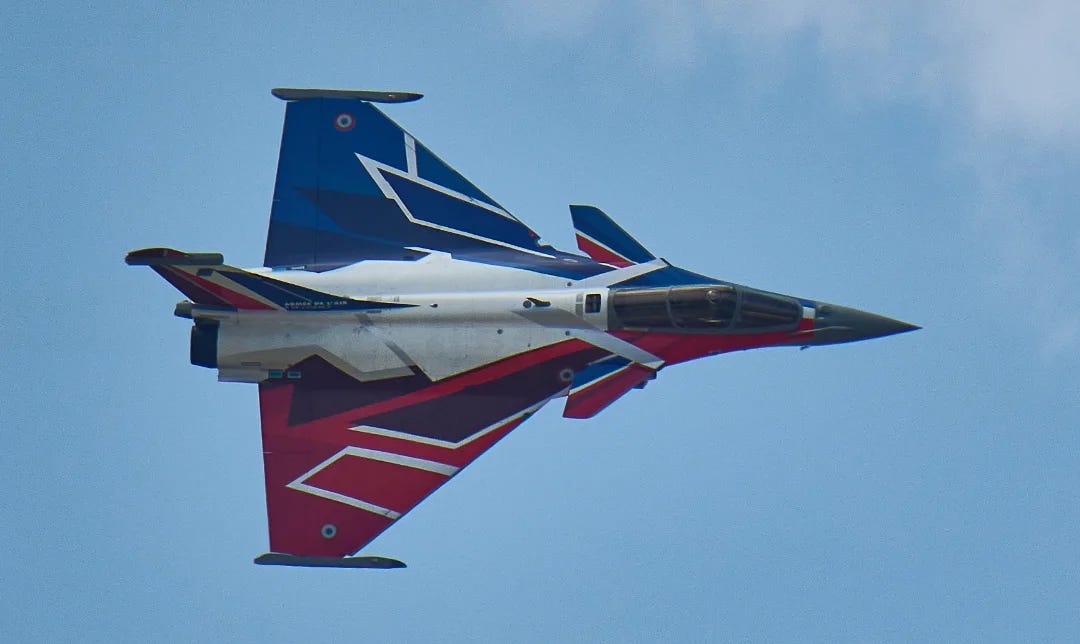
In the midst of the need to consolidate further to create a joint European defense, competition for available funding to build military armaments is straining relations between EU member countries. For example, a corporate struggle for control of a €100 billion project for a new fighter jet has led to division between the partners (France, and Germany) and a fierce industrial row between the French company, Dassault Aviation, and its German partner, Airbus Defense and Space. This has stalled plans to build a new generation fighter (NGF), the key element in a planned Future Combat Air System (FCAS), backed by France, Germany, and Spain.
“Some sector analysts suggest this contretemps and resulting stall in operations is part of Washington’s approach to ‘divide and rule,’” said Tara Varma, managing director of the Strategic Foresight program for the German Marshall Fund (GMF), a US-based think tank, and director of the organization’s Paris office. The strategy, pitting one nation against another, gave some nations considered “friendly” (e.g., Germany, Hungary, Poland, Slovakia) preferential treatment, she added.
Paul Taylor, senior visiting fellow at the European Policy Centre, says the current EU defense initiative is operating on a “pork barrel instinct,” with European nations favoring national suppliers in their rearmament drive – a ‘renationalization of defense’ – with Rheinmetall, for example, benefitting from orders from Germany. Professor Webber suggests the infighting might desist “if the EU were to change its single market rule, so that no government could discriminate in favor of its own national suppliers.”
Meanwhile, according to media reports, rather than see the project cancelled, France is considering appointing a former arms procurement chief, Laurent Collet-Billon, to act as the French moderator to effect an agreement among the French and German industrial partners. Berlin reportedly has yet to appoint a German moderator.
The UK: In or Out?
Despite leaving the EU through Brexit, the UK has been attempting to join the EU’s €150 billion fund – Security Action For Europe (SAFE) – for the common procurement of weapons. Last November, London pulled out of the first round of applications, rejecting the hefty entry fee. Now it wants back in. “Trump has been so obnoxious to the UK, they had no choice but to throw in their lot with the Europeans,” says Professor Webber of the European nation with the closest ties to the US. “Brexit could not have been more poorly timed.”
António Costa, President of the European Council, told reporters on March 24 he was confident the EU and the UK would reach agreement on Britain’s joining.
Cui Bono? (Who Benefits?)
Given the internal political stumbling blocks and financial pressures, the US actually stands to benefit from a continually disunited Europe.
“The EU is the key arms market for the US,” wrote Hélène Masson, senior research fellow at the Fondation pour la Recherche Stratégique, in the think tank’s February research note. In fact, EU defense spending increased in the 2024 run-up to the second Trump administration and amid calls in European NATO states to strengthen the arms industry in Europe.
Before the Russian invasion of Ukraine in 2022, the EU member states spent €214 billion on defense, which rose to close to €300 billion in 2024, according to EU Commission President Ursula von der Leyen, writing in the foreword of La Défense Européenne à l’Heure de la Guerre en Ukraine (Editions du Villard). Close to 80 percent of that arms spending went to companies outside the EU, she added. And a March 2025 fact sheet from the Stockholm International Peace Research Institute (SIPRI), a Swedish think tank, shows the US accounted for 64 percent of arms imports by European NATO states in 2022-2024, up from 52 percent in 2015-2019.
And there’s a link between the Iran and the Ukraine wars, as the Trump administration has (temporarily) lifted sanctions on Russian oil exports to ease shortages caused by the closure of the Strait of Hormuz. “Putin benefits from this financially,” points out Professor Webber, “and Zelensky is nervous.”
In the future, European leaders will want to keep on good terms with the US, “but they will be understandably reluctant to rely on the US for security,” adds Professor Webber. “We can say Europeans are deeply worried. And Greenland isn’t over yet.”

Pierre Tran reports on French defence policy and the arms industry. He writes for specialist outlets including Second Line of Defense, and European Security & Defence, and has worked for Reuters, Agence France-Presse, and Defense News. He is a contributor to Friends On The Shelf, a London-based magazine of short memoirs. Pierre is a member of the Anglo American Press Association of Paris.

Thank you Shellie and Peter! We need clear concise, hard information over here in the USofA where the major papers spend more time on traffic, weather and fashion than what is actually happening in the world. We also need... a world view.
Glad to be able to read this wide-ranging and yet succinctly expressed analysis. Thank you.