
By Penelope Rowlands

The US and France each have a distinct national language, but they treat them in disparate ways. France is enormously protective of its mother tongue, while the US – a country of immigrants, where hundreds of languages are spoken – has never officially put English in that category.
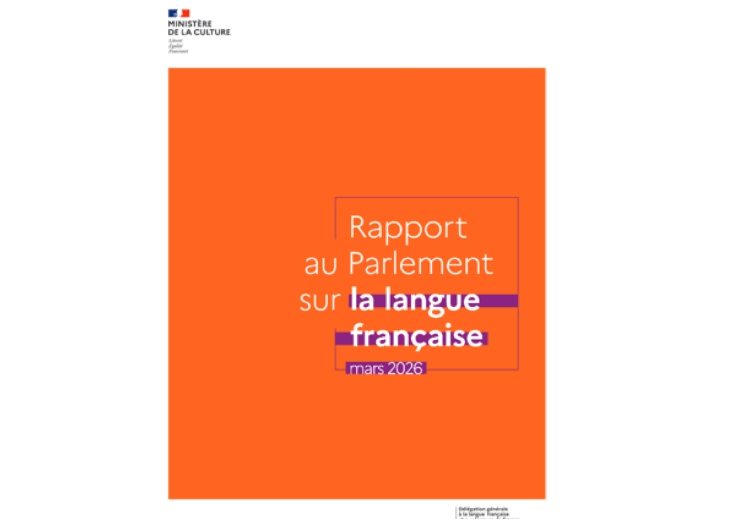
For the French, preserving their national language is paramount. In a recent report from the Ministry of Culture, department minister Catherine Pégard noted that French is the fourth most spoken language in the world. It is now spoken by 365 million people, including citizens of the French overseas territories, according to the report.
“French is a living language and one that evolves,” Pégard added. “It must remain as a bridge between cultures and generations. It’s up to us to make sure that it thrives.”
To ensure that this happens, various organizations are devoted to the task, including the august Académie Française. One of the five constituent academies of the Institut de France, it is responsible for promulgating the French language – and famously creating its dictionaries at the pace of an escargot. In the meantime, the Académie keeps pace in other ways, offering tips on correct usage via its website.
One thing is certain, the French language – taught rigorously, beginning in the country’s 42,000 primary schools – is a matter of enormous national pride. As some of us know firsthand, it takes work to learn to speak it correctly. Many of its verb tenses – hello, imperfect subjunctive! – are notoriously difficult, at least for foreign adopters. Not to mention such grammatical booby traps as the ne explétif, a two-letter word some erudite francophones use as a kind of fillip to improve the rhythm of a sentence.
And then there are those nasty interlopers – the faux amis! Fake friends that leap from one language into another, diabolically changing their meaning as they go. These treacherous, so-called allies confuse foreigners learning French.
Preserving the Mother Tongue
As for the French themselves, they have other things to worry about – notably incursions into their sacred mother tongue. Back in 1994, the country passed the Toubon law – named for Jacques Toubon, then the country’s Minister of Culture – who was adamant in his campaign to de-English his native language.
His law required that French be used in teaching, at work, and in the country’s official government publications, as well as in some advertising. It also, rather grandly, promised to safeguard “the right to the French Language” for that country’s citizens. Some time-honored Englishisms, such as “le week-end,” got a pass as, eventually, did such Silicon Valleyisms as “dot-com” and “start-up.”
America, in its own way, also takes a pedagogic approach to its own language. The United States Department of State, for example, offers an excellent website that focuses on “teaching and learning about American English and American culture.” Even so, the US – notably multicultural – takes a more nuanced approach than the top-down one favored by the French.
Back when the US Constitution was ratified in 1790, America’s population spoke many languages beyond English, including Spanish, Dutch, German, and multiple indigenous ones spoken by native tribes. Many others have been added in the centuries since. While English is the most dominant of these, it wasn’t until Presidential Executive Order 14224, signed March 1, 2025, that it was declared the official language of the country’s federal agencies.
“Wait, what?” you may ask. You’re not alone. Many Americans hardly registered this development, which seemed to reflect the Trump administration’s wary approach towards immigrants.
Some organizations, such as the American Council on the Teaching of Foreign Languages (ACTFL) disapproved, noting that 67 million Americans speak a language other than English in the home. “While there is little doubt that English proficiency is valuable for communication and economic opportunity,” an ACTFL statement read, “policies that formally elevate one language at the expense of others fail to recognize the rich linguistic diversity that has long been a strength of our nation.”
Trump’s Executive Order is not law, has only limited power, and can be repealed by subsequent administrations. So, is English actually the official language of the United States? The correct answer just may be... maybe. It is at least the *lingua franca.
Word on the Street
Meanwhile, dismaying verbal tics keep hitchhiking their way into American English. Words like “you know” and such hateful locutions as the word “like” dropped into the beginning of sentences. “Like, you know,” etc., etc. Not to mention obscenities, which you rarely, if ever, hear in normal conversation in France. In the US, and even in its media, the “F word” and its unpleasant relatives seem to float in the air, carrying a distinct feeling of ambient hostility along with them.
So, there are far worse linguistic crimes than the dreaded faux amis. In fact, these seem tame in comparison. No one, after all, has been injured by incorrectly using the French verb “injurer” – which to anglophone ears sounds like causing physical harm, while to native speakers it just means insulting them with words.
Proper English itself, on the other hand, looks increasingly vulnerable to both insult and to injury. It definitely seems in need of some TLC. Perhaps it’s time to take a few lessons from the French?
*Lingua franca: A language that is adopted as a common language among speakers whose native languages are different.

Great essay. I just read a short article about the Academie Francaise and its cultistness (I think I just invented a word). Thanks.
Whilst wandering around L'Occitania improving my terrible Nebraska French I would meet young people and ask "Parle Anglais?" The answer was usually "Pas un mot! Pas un mot!" I would say "Çe n'est pas vrai, vous pouvez dire Big Mac, Chili McCheese, le snacking." That really got them going. Mais heuresement, Les Grandes Dames were very pleased I could hold a basic conversation. They felt there might be some small hope for Americans after all.