


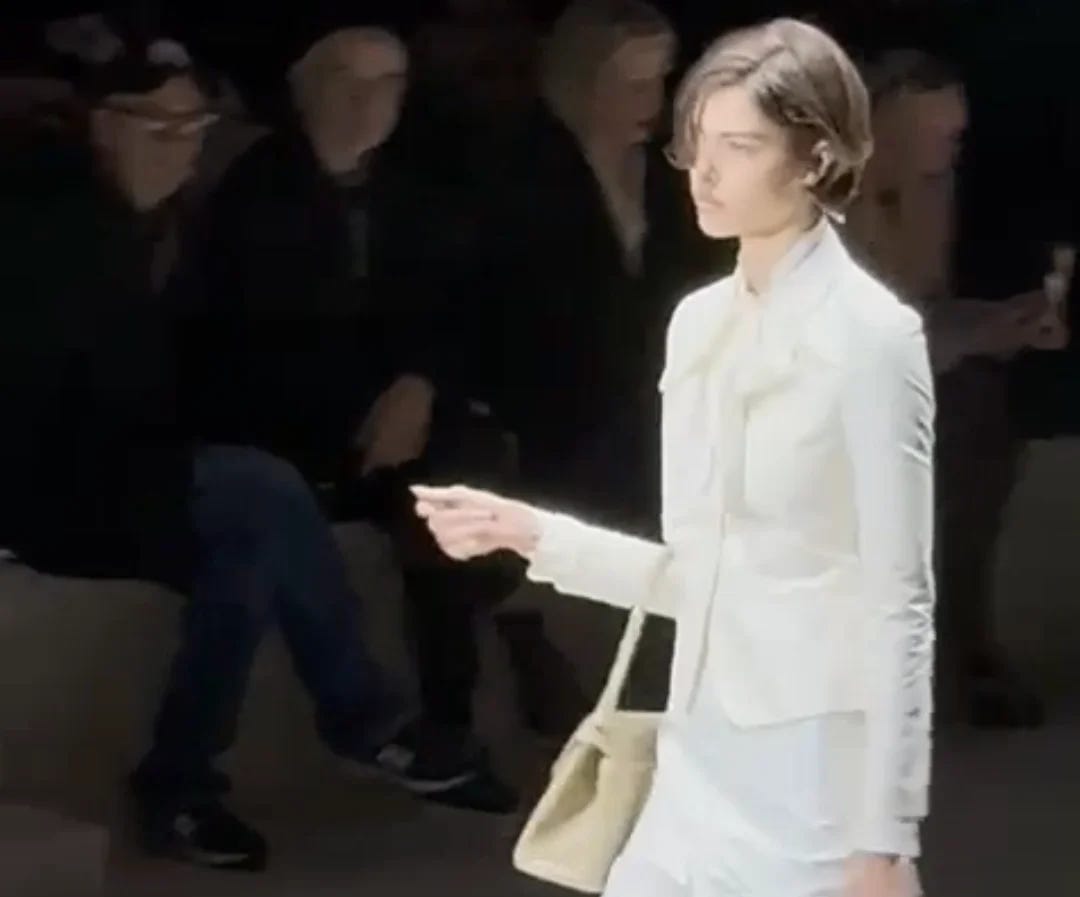
Some years ago, the late Francesco Trapani, then the CEO of Italian jewelry house Bulgari, was asked what the biggest threat to his business was. His answer was direct, to the point, and one word: “War.”
The war in focus this year is the US-Israeli attacks on Iran and the subsequent rapid spread of hostilities in the oil-producing and exporting Persian Gulf region.
“War dims the outlook for the sector,” Luca Solca, a senior analyst at Bernstein where he covers global luxury goods, told talking to Reporting from Paris. “War is bad for luxury goods, as it typically entails a recession and depressed consumer ‘feel good.’ Luxury – like all discretionary sectors – thrives on macroeconomic growth and strong consumer sentiment.”
That consumer sentiment turned sour early on in the war, as global oil prices skyrocketed and stock markets around the world plunged – resulting in the worst returns for the sector since COVID/2022.
Bombs and Other External Pressures
But even before the war in the Persian Gulf and its economic impact, severe external pressures were weighing on luxury fashion. The latest McKinsey and The Business of Fashion (BOF) annual report, issued before the attacks on Iran, was already gloomy: Executives described the industry as no longer merely facing ‘uncertainty’ but entrenched in ‘challenge,’ with tariff pressures and geopolitical complexities ranking among the top obstacles.
These external pressures include:
Persistent inflation and consumer cost constraints, which have curbed discretionary spending across major markets, in particular in China, which had accounted for some 30 percent of the sector’s business.
Intensification of price sensitivity. Donald Trump’s imposition of tariffs has forced up the price of luxury goods in the key US market by between 10 and 20 percent for many labels, according to quarterly financial reports.
Evolving value systems among younger consumers who demand accountability and sustainability, putting a spotlight on business practices – especially supply chains. (Over the past two years, a broad investigation by Italian authorities into the labor practices of luxury fashion companies such as Dior, Armani, and Loro Piana uncovered incidences of labor exploitation and unregistered employment in their supply chains. The investigations are in various states of amicable resolution,)
But some of today’s luxury sector problems are self-inflicted. Brands raised prices exponentially during the post-COVID boom. According to a report by Singapore-based Channel News Asia (CNA), the average price of luxury goods increased between 50-70 percent between 2019 and 2024, much of it due to post-pandemic ‘revenge spending.’
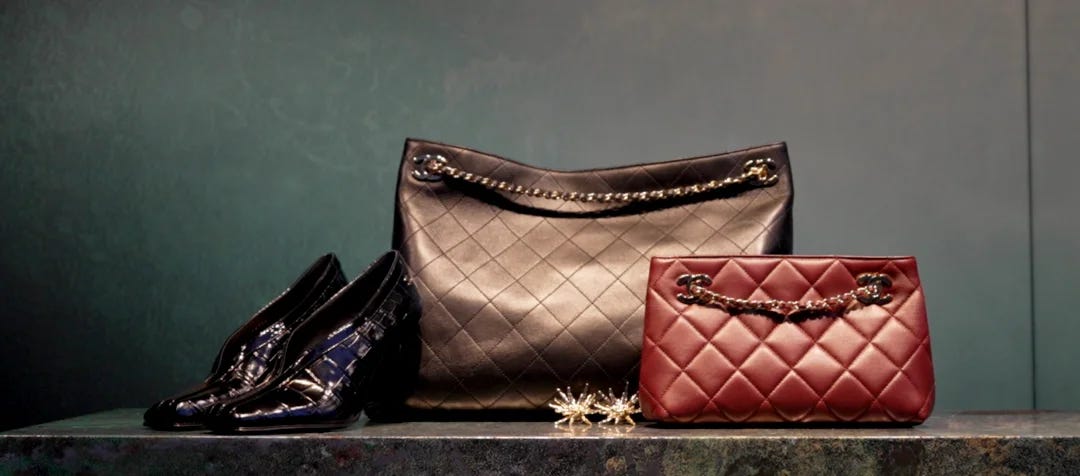
As customer demand surged, brands flexed their pricing power, giving rise to hyper-growth within the sector, and targeting an increasingly wealthy but smaller customer base. For example, multiple independent sources such as Vogue and Sotheby’s report that boutique prices for the medium-sized Chanel Classic Flap Bag have nearly doubled between 2019 and 2026: rising from around $5,800 in 2019 to $10,800 today, without a perceived increase in craftsmanship.
Exodus of the Aspirational
A recent Bain & Company report indicates that rising prices have also pushed out middle-income aspirational buyers, with millions of customers deserting the luxury sector in recent years. “The most fascinating element is sociological, namely a form of ‘separatism’ or ‘decoupling’ by the upper classes,” says Frédéric Godart, a French sociologist and Professor of Organisational Behaviour at business school INSEAD. “This has been noted by many scholars and is particularly acute in luxury consumption.”
Meanwhile, a number of brands have rallied to serve the ‘merely wealthy’ customer with money to spend. Brands such as Eleventy and Aurélien compete with Brunello Cucinelli and Loro Piana. Mid-price leather goods companies such as Coach and Polène aim to attract value-conscious consumers who are happy to buy a stylish bag for less than $1,000 versus a big-brand bag with prices starting at $3,500.
And Inditex, parent company of fast-fashion doyenne Zara, apparently believes customers disenfranchised by the rising cost of luxury fashion are ready for a more upscale offering: John Galliano was hired in March to design an elite range for the Zara portfolio.
Can Musical Chairs Generate Growth?
Today, luxury industry growth projections are almost flat, with the sector expected to grow this year at just 3-6 percent – a forecast made before the US-Israeli strikes on Iran. The days when luxury fashion could grow and pursue exclusivity by simply raising the price tag are over.
Prices of each new collection may well continue to rise but customers will expect creativity to rise in tandem. As a consequence, the sector is playing musical chairs, with some 15 new creative directors taking the helm at luxury brands in the past year-and-a-half – including Matthieu Blazy at Chanel, Sarah Burton at Givenchy, Maria Grazia Chiuri at Fendi (where she began her career), and Jonathan Anderson at Dior.
Perhaps most importantly, there is also Demna at Gucci (replacing the short-tenured Sabato De Sarno) on whose shoulders lies the brand’s anticipated regeneration – as well as that of Kering, Gucci’s luxury conglomerate owner, itself with a new leader at the helm, Luca de Meo, formerly CEO of French automaker Renault.
“The new CEO {at Kering} has managed to shore up the business and not let it go under, fixing the balance sheet and debt emergency,” says Solca. “Primum vivere, deinde philosophari (live first then philosophize). Relaunching the brands is a different game, which is now in the very first inning, in my impression… Brands are trying to reignite interest and desire. But as De Sarno has vividly demonstrated at Gucci, not all changes work.”
Judgements on the Runway
Critical consensus following Paris Fashion Week in March found Demna’s first ‘maximalist/minimalist’ collection for Gucci “a clear break/reset for the brand, more good than bad,” and while not yet coherent with a so-called new Gucci vision, “possessing cultural relevance and edge.”
Demna for Gucci, Milan, FW '26 collection [video © Tommaso Palazzi]
Blazy’s collection for Chanel, on the other hand, was received by critics as one of the most successful designer debuts in recent fashion history, both critically and commercially.
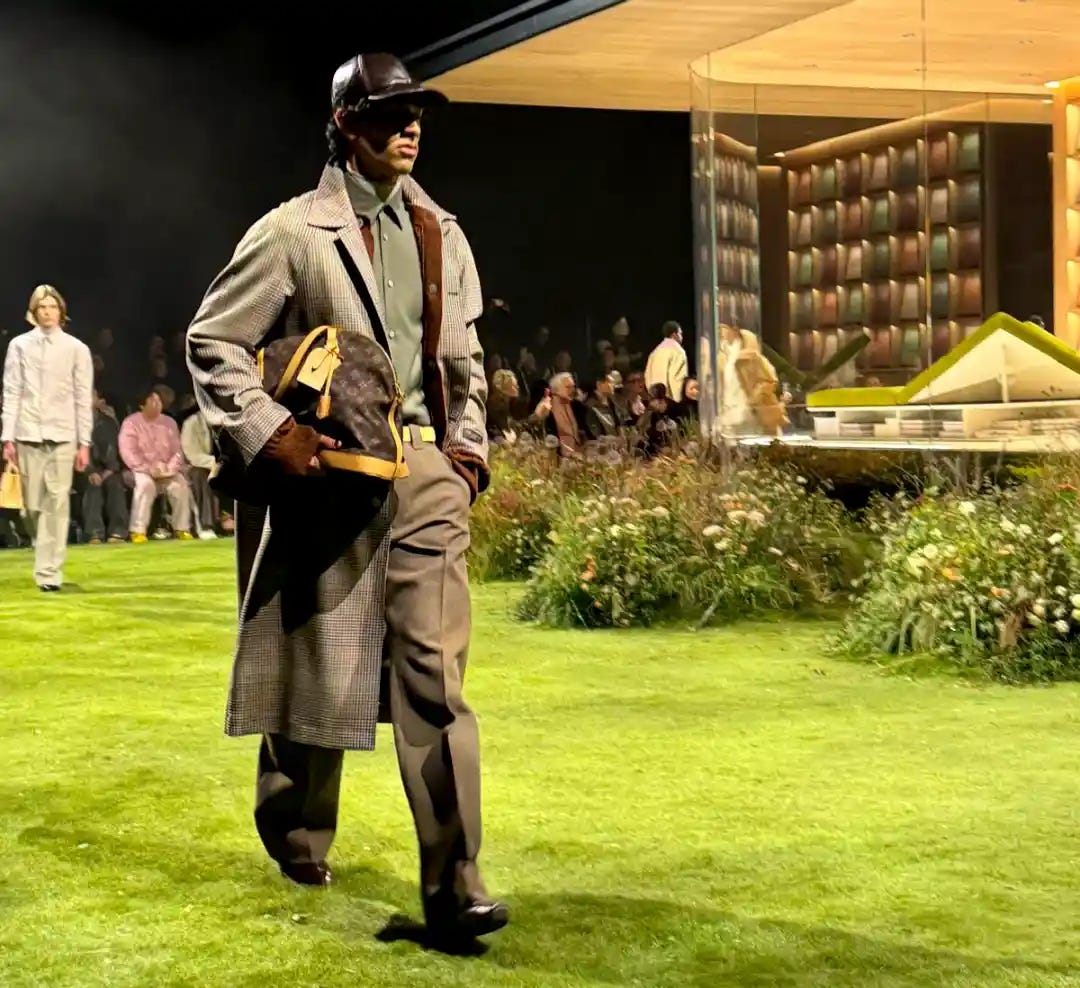
Elsewhere, appointed creative director at Dior in June 2025, Jonathan Anderson’s recent womenswear collection, with its Monet-water-lilies-nature theme, was critically considered “playful but crafted.”
The Hermès Haven
And then there’s the sector’s ‘safe haven,’ its standard-bearer: Hermès. Now in its sixth generation of family leadership (the seventh generation is currently working its way up the ladder), it has consistently performed better than its peers in both strong and weak cycles because of its strategy: Hermès grows by staying small.
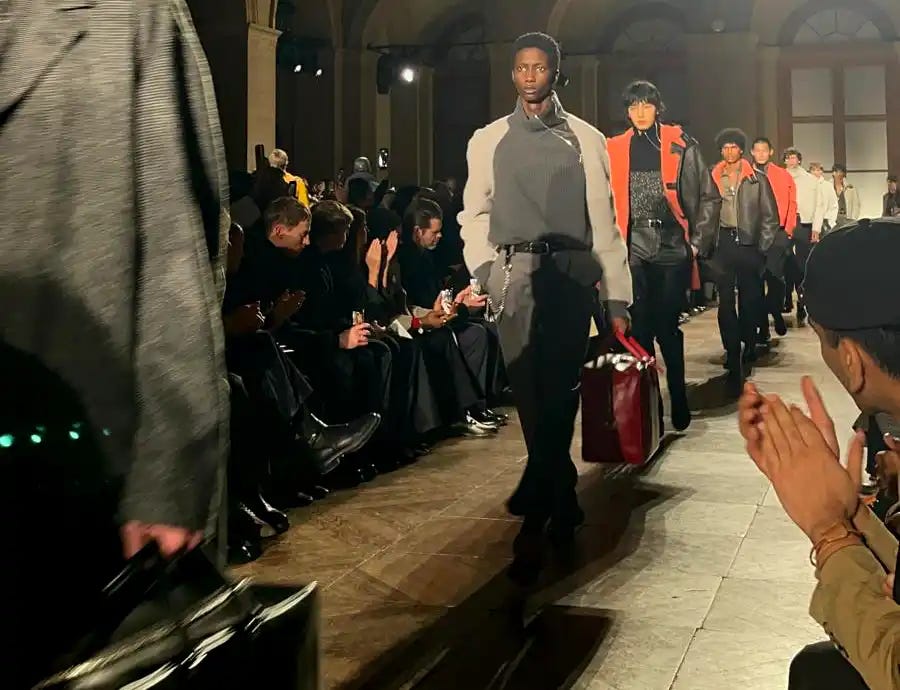
Its famed exclusivity is maintained by fostering scarcity, controlling supply, and focusing on ultra-wealthy clients. This practice has found the company in the crosshairs of class action lawsuits filed by customers frustrated at being relegated to waiting lists for Birkin handbags for which they are willing and ready to pay upwards of $10,000. (Resale prices aren’t much cheaper. Auction house Sotheby’s brochure this year notes that US prices for core leather Birkin and Kelly bags rose between 6.3 percent and 8.9 percent in January 2026; in Europe, 7.3 percent to 9.4 percent. The classic 30” Birkin, second hand, now costs $14,900 [US] vs 10,600 euros [Europe]).
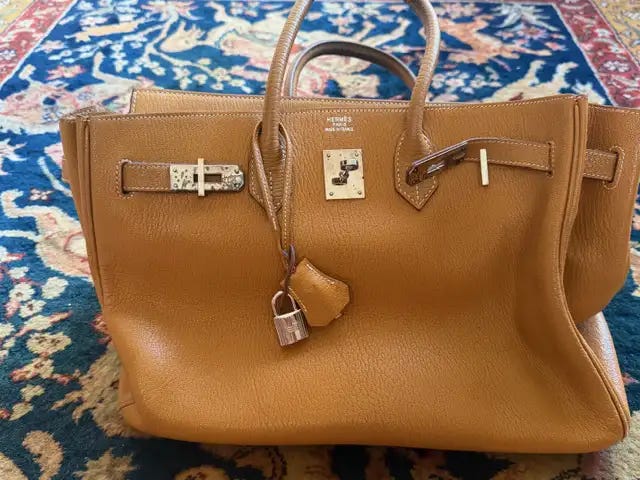
CEO Axel Dumas sees no reason to change strategy, citing client loyalty and brand desirability for continued growth. “In a complex geopolitical and economic context, the house is strengthening its fundamentals more than ever,” he said, following the company’s robust 2025 results, released earlier this year.
But for the rest of the sector, the era of easy expansion has waned. Profitability now hinges on strategic segmentation, consumer engagement, and balancing tradition with innovation.
Shoppers line up outside the Louis Vuitton flagship store in the Champs Elysees, Paris (March, 2026) [video © Celine Marchand]
And the Future?
Analysts see normalization by 2027, but “2026 will not be easy,” LVMH boss Bernard Arnault predicted, following the conglomerate’s 2025 results at the start of this year. It’s a sentiment echoed by others, too.
“Success will certainly come from creativity and imagination,” says Godart. “The reshuffling of creative leaders and their mobility usually generates creative sparks, so this should benefit the industry. But it won’t be enough…
“For the first time, the luxury sector will need to keep an eye on costs. Failure will come from ignoring the fundamental sociological factors behind the plateauing of its growth – namely the fact that the upper-middle class (the aspirational customer) now prioritizes value for money and style, and even functionality, over status.”
Attracting Gen Z and Gen Alpha is a hard-to-fathom challenge. “The sector has tried to engage the next generation,” Godart continues, “by investing in gaming and Web3, but it has largely failed because of a tension between what luxury entails and the values of these younger segments.”
At Bernstein, Solca is counting on consumers in the US and China to open their wallets, but macro-economic conditions temper his outlook. “Failure,” he says, could come from “a stock market correction that could puncture American consumer confidence, before we have any significant improvement in Chinese demand.”
Navigating Uncharted Waters
The current luxury conglomerates such as LVMH and Kering have been the predominant business model for the past two decades: their size and diversity allow them to control costs and weather economic storms. But geopolitical uncertainty and technological advances such as AI are creating uncharted waters.
Godart believes these challenges have created what he calls the inherent reality of luxury. “You cannot grow forever,” he says, “because if you do, you are no longer truly luxury.” It could be the sector’s biggest creative challenge yet.
Editor’s note: Kering, Hermès, and LVMH are publicly traded companies, while Chanel is privately owned by French brothers Alain and Gérard Wertheimer through the holding company Chanel Limited, headquartered in London

The following experts were interviewed for this article:


"Attracting Gen Z and Gen Alpha is a hard-to-fathom challenge. “The sector has tried to engage the next generation,” Godart continues, “by investing in gaming and Web3, but it has largely failed because of a tension between what luxury entails and the values of these younger segments.”
A very interesting point. I'd love to see this spelled out: what exactly are these values?
Hi, I really liked your article and I agree that the topic of the War, in fact, is one of the most delicate points, since the best directors can create the best collections under Certain projections exist, however, the issue of war is very unpredictable; honestly, I see a negative outlook for the sector for at least another year or two.