

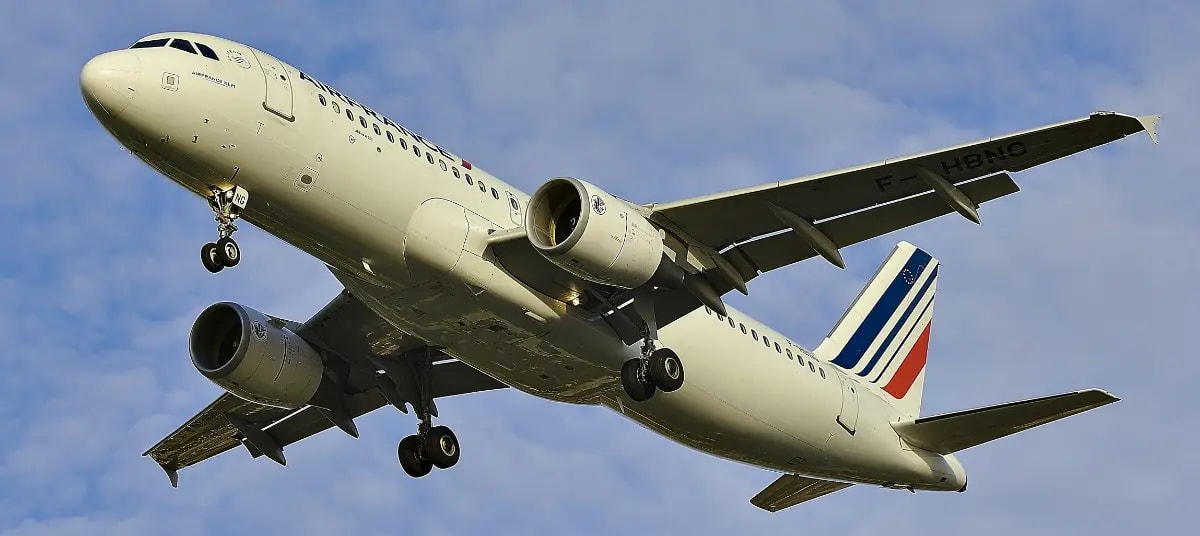
What’s More Important than a Flatbed in Flight?
An arbitrary ranking of the best airline experience is easy to find.
My ranking is arbitrary, too, but it’s a ranking of something different and more interesting: airline experiences that are the most beautiful and pleasing on the eye. Airline as art, as it were.
Food and wine – culinary art – is one differentiator, but frankly there’s only so much one can do with this on a plane. The art of service can be a big differentiator as well, of course, especially in the economy cabin.
But in the first-class premium cabins, in addition to providing the best functionality (and almost all airlines now provide more than the basics – think flatbed), the key differentiator has to be the experience: how the product makes one feel – its design, its aesthetic, its capacity for making the heart sing.
Here are my top five:
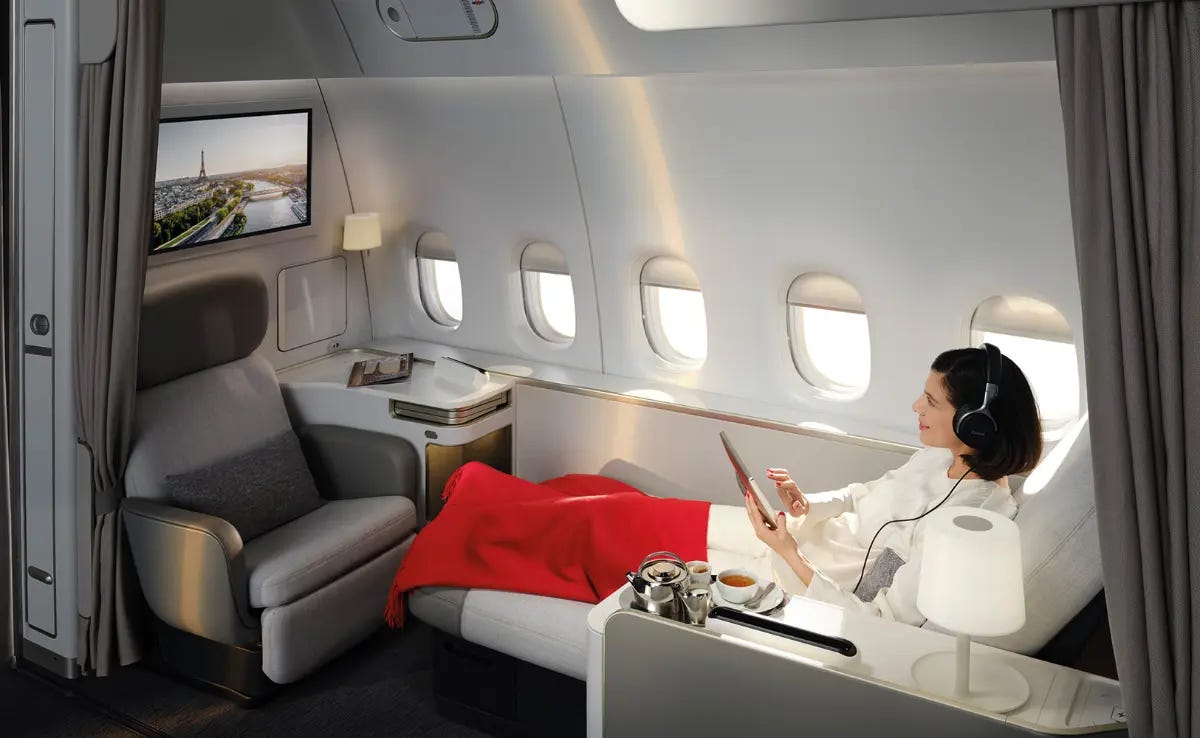
Air France New La Première on the Boeing 777-300
The old La Première/first class was pretty darn amazing, but this takes commercial flying to a new level of beauty – the color palette, the clean lines, the five-window-length, the lack of try-hardness, the curtains (ooh, the curtains)... It’s like sitting inside a work of art. Add to that the extraordinary ground service, especially at Charles de Gaulle Airport (there are actual hotel suites in the lounge).
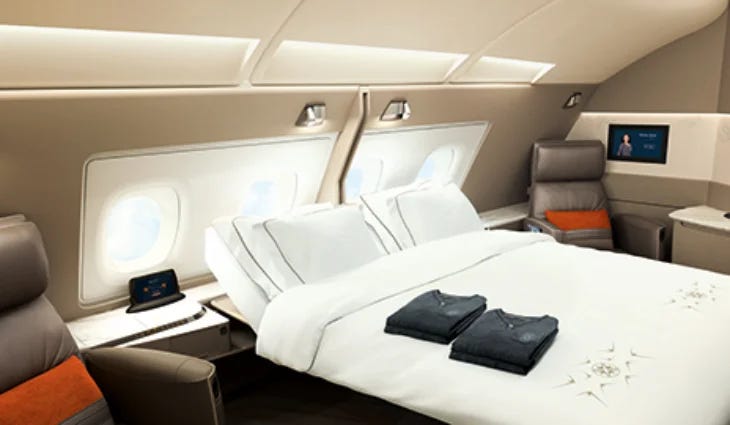
Singapore Airlines Suites on the Airbus A380
Honestly, I am not spectacularly keen on the shades-of-brown color scheme, but everything else is pretty staggering – from the fact that this is a whole room (with separate leather chair and bed) to the way you can put two “rooms” together to create a double bed, and from the beauty of the carved suite doors to the people serving you. The product is now almost ten years old but it’s still a masterpiece.
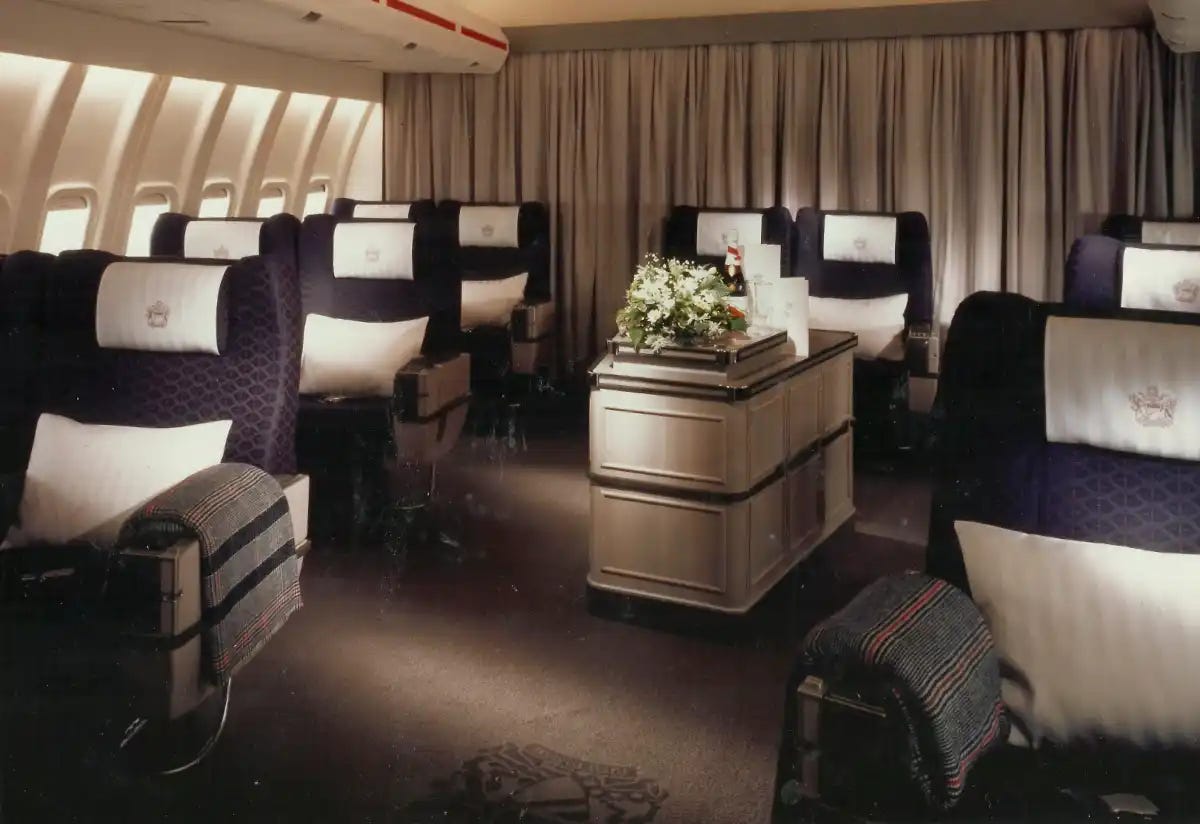
British Airways “Old” First Class on the Boeing 747-400
BA was the first to introduce a flatbed on any aircraft in the mid-90s. It was an instant design classic and, even while Concorde was still flying, felt like the best of aviation. This product was replaced around the turn of the last decade by something that initially seemed like an upgrade – more privacy, more tech, a more brooding aesthetic, on more modern aircraft – but increasingly, in retrospect, seems like an error. Anyone who flew in the original light-brown shell with the grey herringbone seat will still remember it – gorgeous, elite, extraordinary.
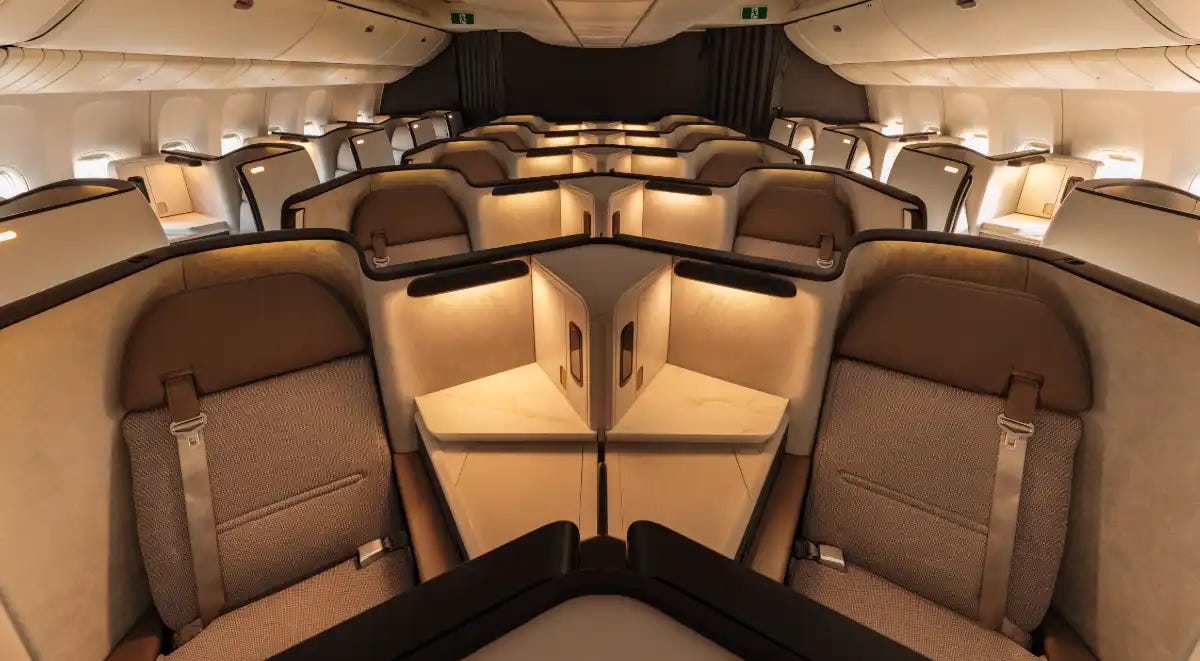
Cathay Pacific Aria Suite (Business Class) on the Boeing 777-300
In some ways, one could argue that there is nothing much that’s special about this – a business class flatbed, a herringbone formation, a suite door that closes for privacy... But this seat, this cabin, this experience is so beautiful: the color palette is astonishingly lush, the tech top notch (you can discern which lavatories are occupied on your IFE screen), and even the toilets themselves are a work of art. Cathay had a few lean years – especially during Covid – but this is a spectacular return to glory.
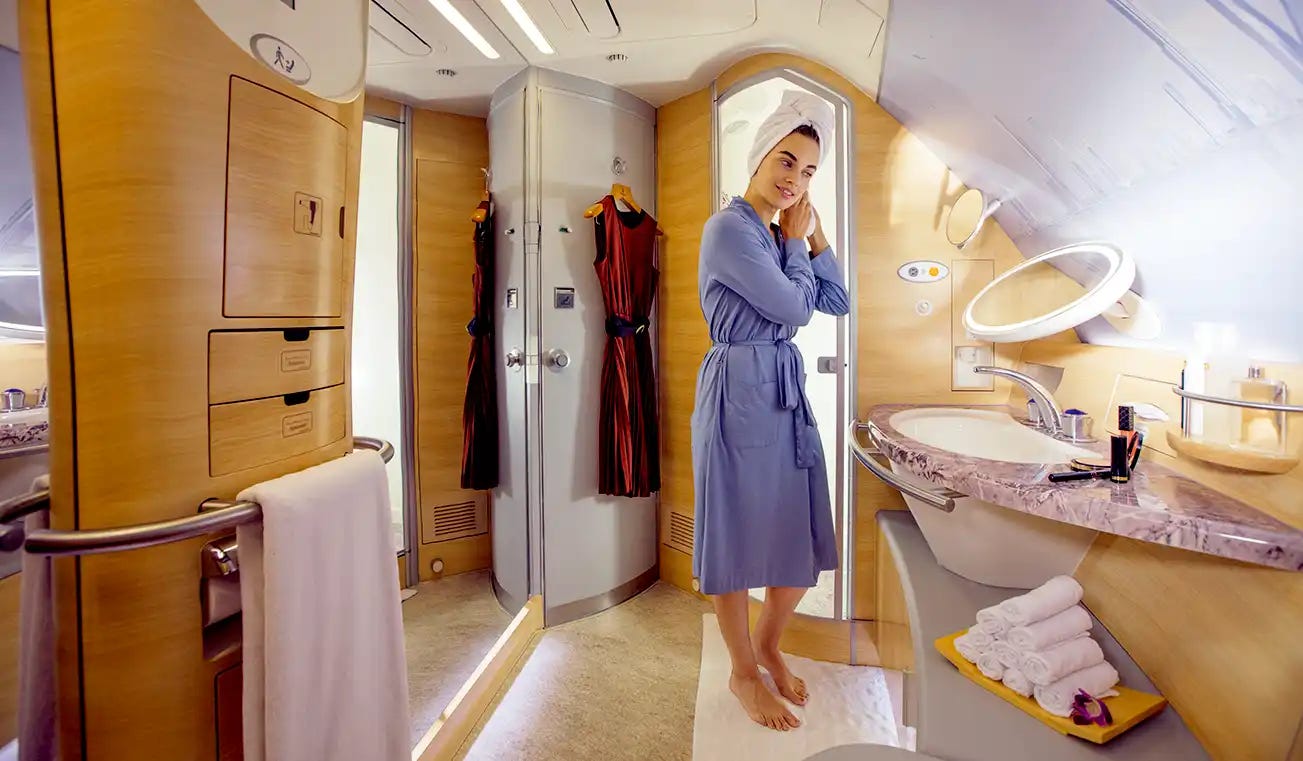
Emirates Showers in First Class on the Airbus A380
Unlike many, I am no big fan of the Middle Eastern airlines’ premium cabins. They all tend to look like a slice of Trump’s New York penthouse and the products can be unpredictable at best. But it would be remiss to create a list like this without mentioning the wonder that is Emirates’ showers on the A380. For one, it’s a shower on an aircraft (there are two on each plane), and far from being a gimmick, they actually do make one feel really good getting off a flight. Furthermore, the showers are gloriously beautiful – with heated floors no less. I kind of hate to say it but they are total genius.
Safe travels.
Major Shift in EU Border Controls
Smile for the camera – or be denied entry.
Just in time for summer holiday travel, the European Union has finally rolled out its fully digital border Entry/Exit System (EES) across 29 countries. Meant to streamline border crossings, the EES replaces passport stamping with biometric registration for non-EU travelers (with a few notable exceptions). Ireland and Cyprus, who are not part of the system, will continue manual checks.
The EES will capture biometric data, including facial images and fingerprints, along with passport details. This data will be collected at the border; there is no need to register in advance. Consequently, authorities warn of longer wait times at airports during the initial phase.
The system applies to all non-EU and non-Schengen nationals entering the EU for stays of up to 90 days, including visa-free travelers and those visiting for tourism or business.
It does not apply to EU or Schengen citizens or those holding long-term visas or residence permits. Children under 12 must have their photographs taken but do not need to give fingerprints.
Anyone refusing to provide biometric data will be denied entry.
Lifestyles of the rich (if not famous)...