


The anniversary of the 1789 French revolution is celebrated with fireworks (weather permitting…) and festivities around the world. And the Paris haunts and monuments of legends such as Lafayette, Danton, Franklin, and Jefferson draw thousands of tourists yearly. With this year’s Bastille Day celebrations over, why not keep the revolutionary flame glowing by walking in the footsteps of others whose ideas changed the world.
They include 19th-century Venezuelan liberation leader Simón Bolívar; Algerian independence fighter Ahmed Ben Bella; and Iran’s Ayatollah Ruhollah Khomeini, who lived briefly in the village of Neauphle-le-Château, to the west of Paris, before returning to spearhead Iran’s 1979 Islamic revolution.
But there was also the raft of early 20th-century leftist activists who laid the foundations of Communist China and Russia. And the Black artists and intellectuals who spearheaded the Négritude movement, founded in Paris, ahead of a wave of colonial independence uprisings in Africa and other former colonies in the 1950s and ’60s.
Lessons of the Paris Commune
Paris was a magnet for many other leftist thinkers and agitators. This was where Karl Marx and Friedrich Engels met in 1844. Where Ho Chi Minh, the first president of North Vietnam, helped to found the French Communist Party in 1920. And where Cambodian revolutionary-turned-dictator Pol Pot studied in the early 1950s.
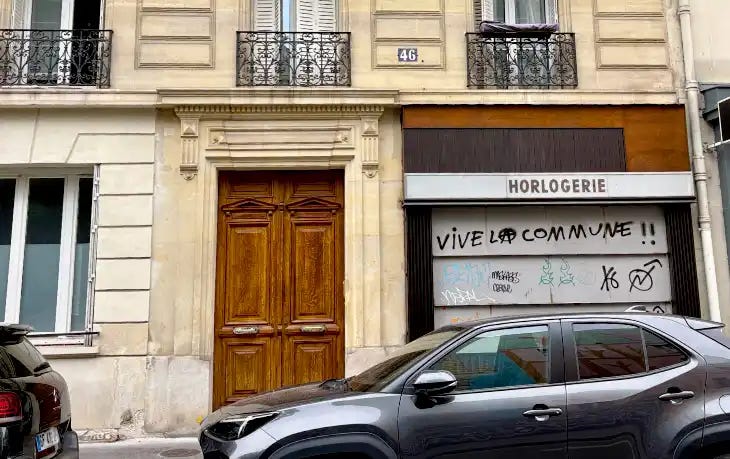
Many were influenced by the Paris Commune of 1871, a short-lived insurrection against the French government that was crushed in a bloody riposte.
“It was the first revolution of the proletariat, as Marx said,” says Paris tour guide and lecturer Thomas Stehlin. “It was a failure, but also a huge inspiration.”
The Commune also helped shape the thinking of Vladimir Lenin, who moved to Paris in December 1908, after exile in Siberia and stints in other European cities. He eventually settled in a small apartment in the 14th arrondissement with his wife, Nadezhda Krupskaya, and his mother-in-law – reportedly moving his mistress, Inessa Armand, into an apartment next door.
Lenin kept a low profile in Paris, studying, writing, and playing chess. He met with Leon Trotsky and other exiled Russians at local cafés, weaving through city traffic on a bicycle – a practical way to also duck Russian secret police.
“Life for these exiles wasn’t easy,” Stehlin says, “as about 40 members of the Czarist police were based in Rue de Grenelle [in the 7th arrondissement].”
Lenin moved out of Paris in 1912. Five years later, he returned to Russia to lead the October Bolshevik Revolution.
“All the Russian revolutionaries left Paris in 1917,” says Serge Wolikow, historian and professor emeritus at the University of Burgundy. “And Russians who were against the revolution began to arrive here.”
To discover exactly where Lenin lived in Paris, take a look at this month’s quiz.
Work, Study, and Revolt
Down a nondescript street off Place d’Italie, in the 13th arrondissement, is a small plaque dedicated to a big figure: Zhou Enlai, who served as foreign minister and first premier of Communist China until his death in 1976.
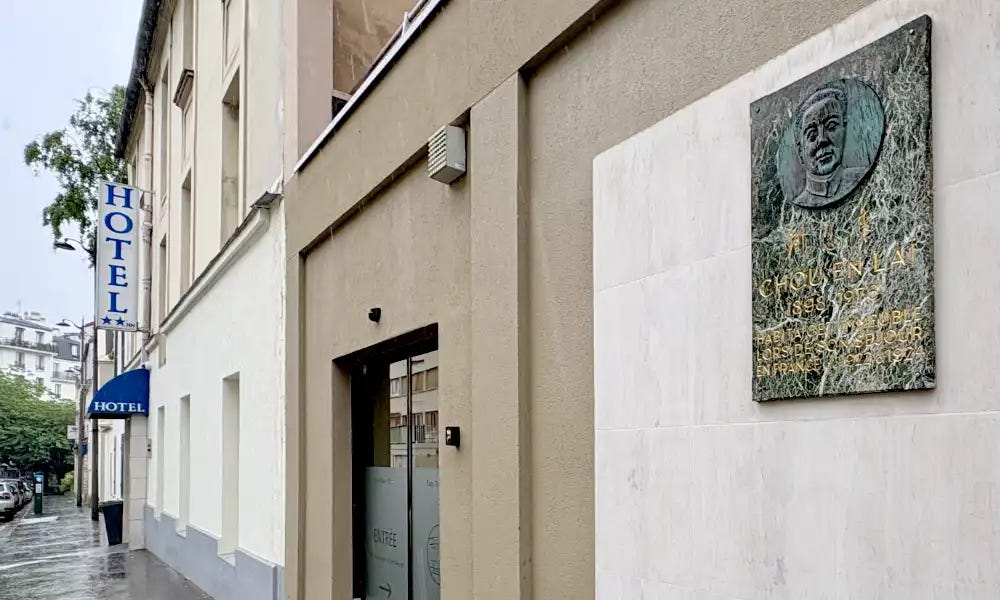
In 1920, Zhou joined a wave of young Chinese heading to France and elsewhere in Europe as part of the “Diligent Work-Frugal Study Movement” that offered an escape from a poor and war-ravaged country.
“They came to continue their studies,” says Li Jianle, owner of the Hôtel Neptune, where Zhou stayed for two years. “Zhou Enlai studied science and worked as a journalist.”
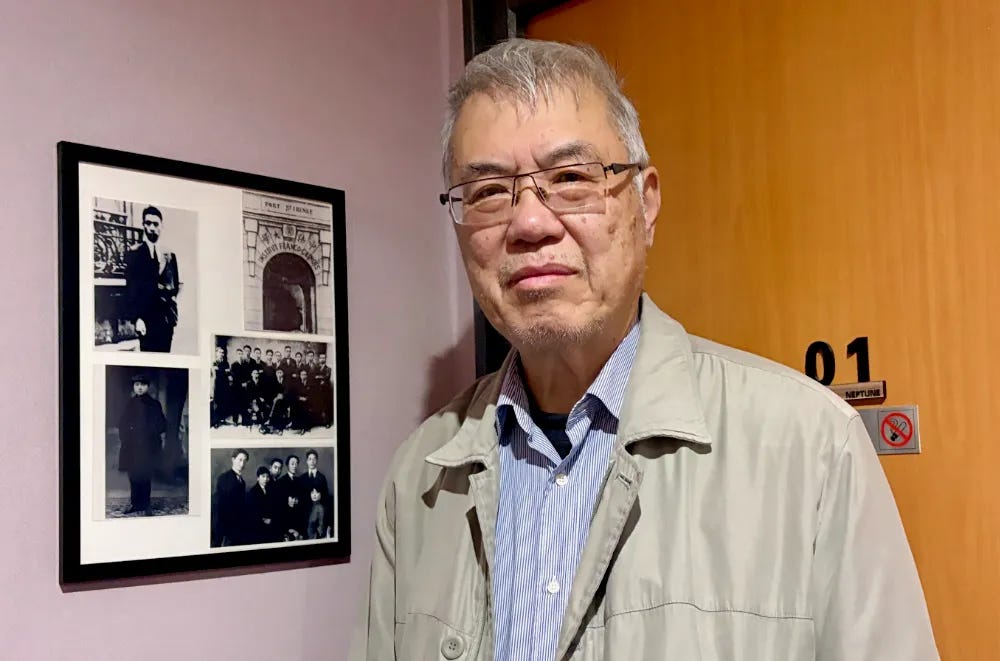
Zhou and his counterparts arrived in a country buffeted by civil unrest. “They observed the social fights, the strikes in France…” says Professor Wolikow at the University of Burgundy. “They discovered Marxist movements and leftist unions.”
Photos of Zhou line the wall outside Room 1 of Hôtel Neptune, where the future Chinese leader lived and worked, reportedly surviving on bread and water. The small room was even smaller during Zhou’s time, reveals hotel owner Li, barely fitting a bed and chair.
“With his comrades, Zhou published two newspapers,” he adds. “The second, called Youth, he did here.”
Zhou wrote the editorials, Li says. Other colleagues pitched in – including future Communist Party leader Deng Xiaoping, who commuted in from the French town of Montargis, more than 60 miles south of Paris, where he worked in a factory.
“Deng would stay Saturday evenings with Zhou Enlai [to work on the newspaper],” Li says. “He slept on the floor – there was no other bed.”
Zhou left the hotel in 1924 and headed home. He and Deng joined a revolution that would pave the way for the People’s Republic of China in 1949. “After he left France, he never returned,” Li says of Zhou.
A university professor, Li moved to Paris with his wife in the 1980s. They bought the hotel in 2001, after hearing about its history.
Today, it is a go-to attraction for many Chinese people. “At the beginning, it was Chinese people like me, from the old generation,” Li says. “But, increasingly, young Chinese are visiting. Which is a good thing. You can’t forget history.”
The Négritude Revolution
Paris attracted many other changemakers early last century, including the best and brightest youngsters from France’s colonies.
Among them were three African and Caribbean writers who met in Paris: Léopold Sédar Senghor from Senegal, Aimé Césaire from Martinique, and Léon-Gontran Damas from French Guiana. In the 1930s, they founded the groundbreaking Négritude movement, affirming Black identity and African culture, and rejecting European colonialism and racism.
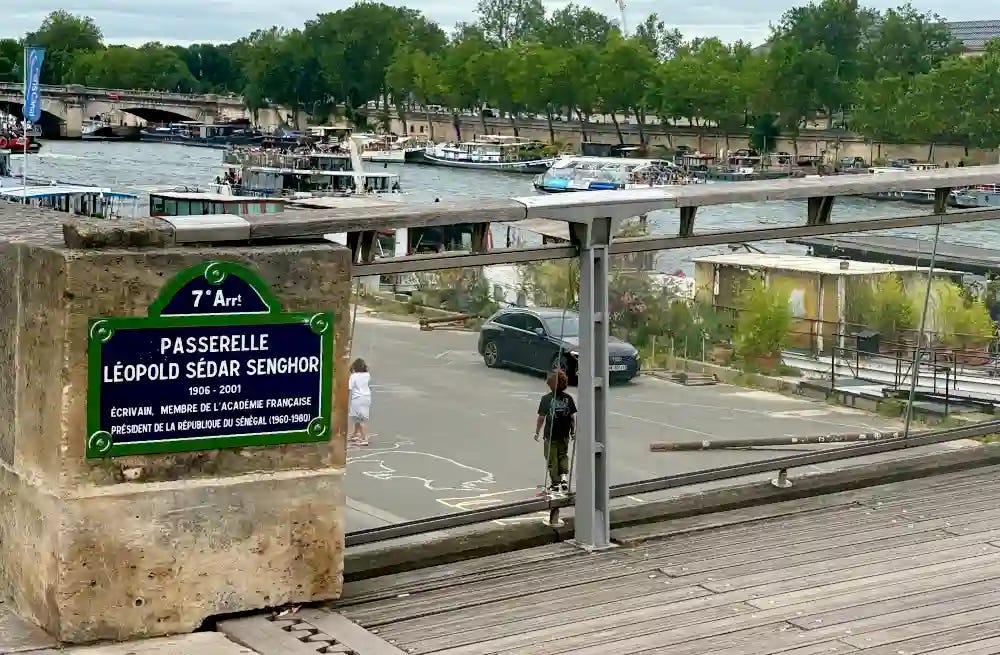
“I think we can call it a revolution,” says Black activist Louis-Georges Tin, who co-founded the Representative Council of Black Associations (CRAN) in France. “It was about redefining North-South relations – and that rebalancing is beginning to happen, even if there are difficulties.”
In the 1940s and ’50s, Left Bank cafés became hubs of debate on Négritude – influenced also by the earlier Harlem Renaissance across the Atlantic in New York, and gathering some of the Black American artists and thinkers who had flocked to Paris. Not all Black intellectuals supported the movement, however, and Black French and Americans did not always see Paris – or France – the same way.
“Many Americans felt they were well received in Paris – and if you compare Alabama to the Latin Quarter in the 1950s, we could say Paris was much more open,” Tin says. “But the majority of Black French weren’t in France in the 1950s, they were in the colonies. And that comparison did not favor France.”
In 1956, the Sorbonne University hosted one of the most important meetings of Black intellectuals of the time, the First Congress of Black Writers and Artists. It was organized by Présence Africaine, a cultural, literary, and political magazine that continues today, along with its Left Bank bookstore and publishing house.
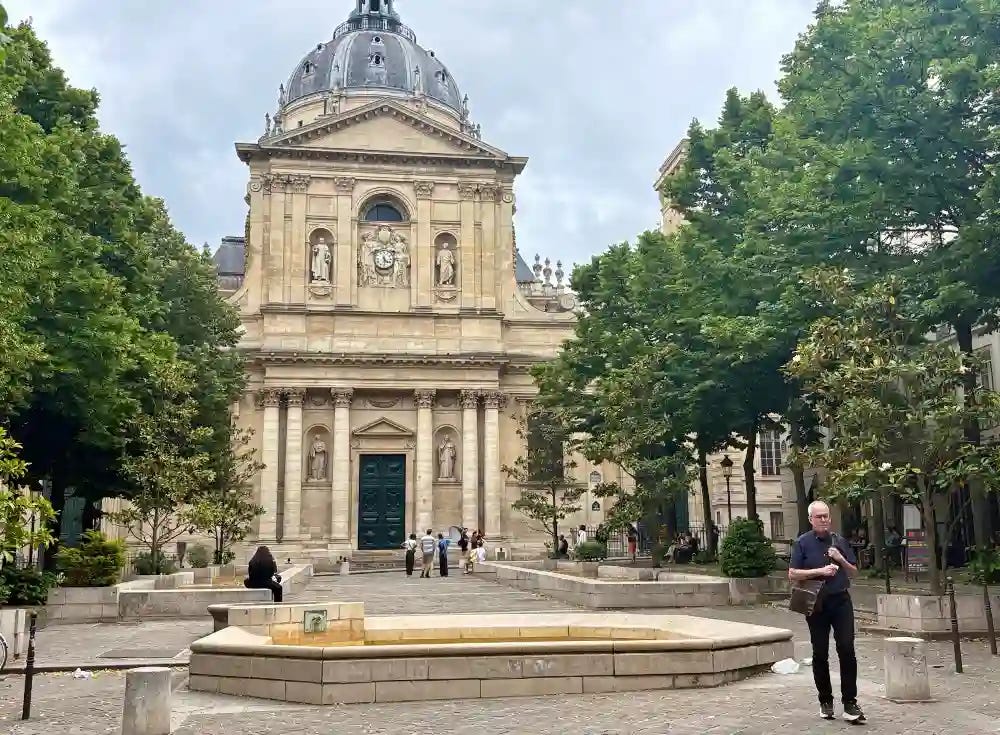
The 1950s and ’60s also saw a wave of independence movements in Africa and elsewhere. The three Négritude founders, later deputies in France’s National Assembly, earned success and acclaim.
Damas went on to become an academic and United Nations delegate. Senghor became independent Senegal’s first president, and the first African member of the Académie Française. Césaire, who became mayor of Martinique’s capital, Fort-de-France, turned to militancy in his writings.
Many believe Négritude has left an enduring footprint on culture, society, and politics, including the Black Lives Matter movement.
“For a Martiniquais like me, Négritude is everywhere,” Tin says of the French overseas department he hails from. “It was a cultural, family, and national immersion. It was a normal reference.”
These and other revolutionaries have left their mark on the French capital in myriad ways – captured in plaques, statues, bookstores, and cafés – and in politics and daily life thousands of miles away.
Even today, as Professor Wolikow observes, “Paris remains a place of encounter, of liberty, of debate – and of exile.”

If readers are interested in the origins of the Négritude movement, listen to this 45-minute France Radio podcast on Paulette Nardal, it's founder. https://www.radiofrance.fr/franceinter/podcasts/femmes-d-exception/paulette-nardal-1163387
Thanks Elizabeth for such an interesting round up of this aspect of Paris. Are you sticking just to Paris or will you drift to other places. So much history everywhere. I am writing a book - biography/history about a writer called Jean Prevost. Much of his WW2 time was spent in Lyon, an equally significant city, after a Parisian existence during the 1920s and 30s.