
“There has never been a better time to drink wine in France”
While the French wine industry suffers nationwide from lower demand, devastated harvests, and American tariffs, niche French vineyards are thriving and new wine bars are opening across Paris.

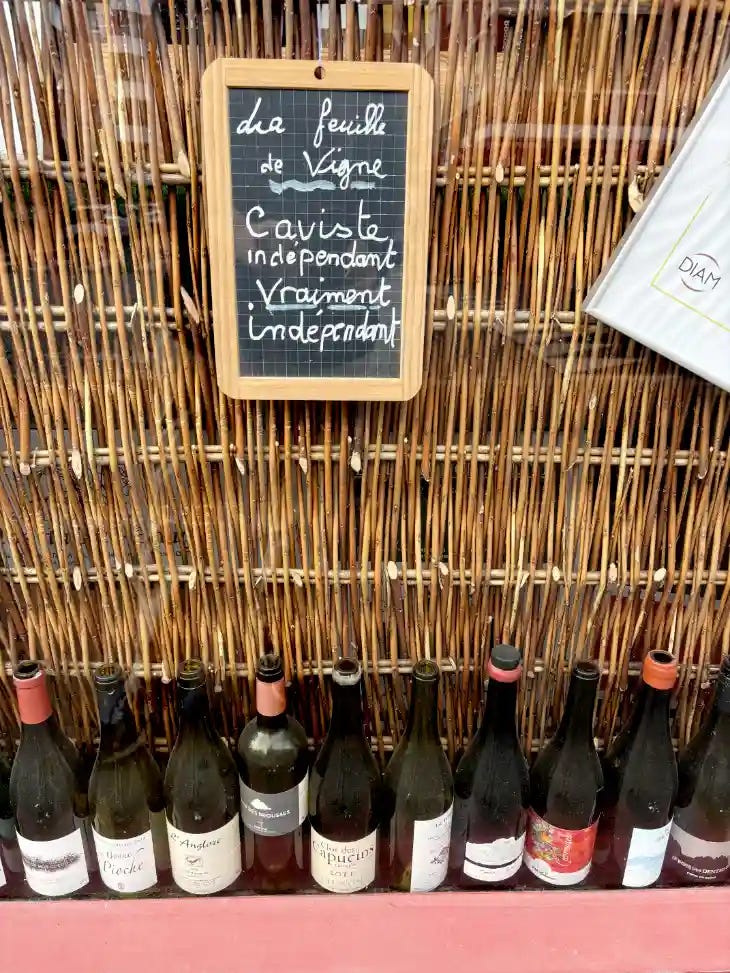
On a recent Thursday evening, the crowds outside the wine bar Cave Canaille, in the 11th arrondissement of Paris, spilled out into the street. Buses and vespas honked their way past vast swaths of mostly young customers who ignored the sweltering heat to enjoy macerated Alsatian Riesling and chilled Loire Gamay.
Anyone who thinks that French wine culture is dying should try to get a table at a decent, wine-forward restaurant in eastern Paris – say, Le Baratin or Lissit – on a Thursday night. While many legacy wineries across the country are undeniably struggling with severe crises, the most ambitious wine bars and restaurants have become international destinations, and buyers from Japan and the United States are willing to pay record-high sums for artisan natural wines.
Perfect Storm, New Trends
Nationwide, a perfect storm has hit French wine. Demand has been shrinking, tariffs and shifting geopolitics are wreaking havoc on global exports, and climate change is destroying harvests.
Despite this, artisanal wine makers, from the hills of Languedoc to the mountains of Ardèche, are producing radical wines with integrity and personality, attracting wine lovers from all over the world who increasingly plan entire vacations around France based on the regions they want to explore. Along Canal Saint-Martin, arguably the social heart of contemporary Paris, summer evenings unfurl with hundreds of people sharing bottles of wine on the stone quays, legs dangling just above the murky water.
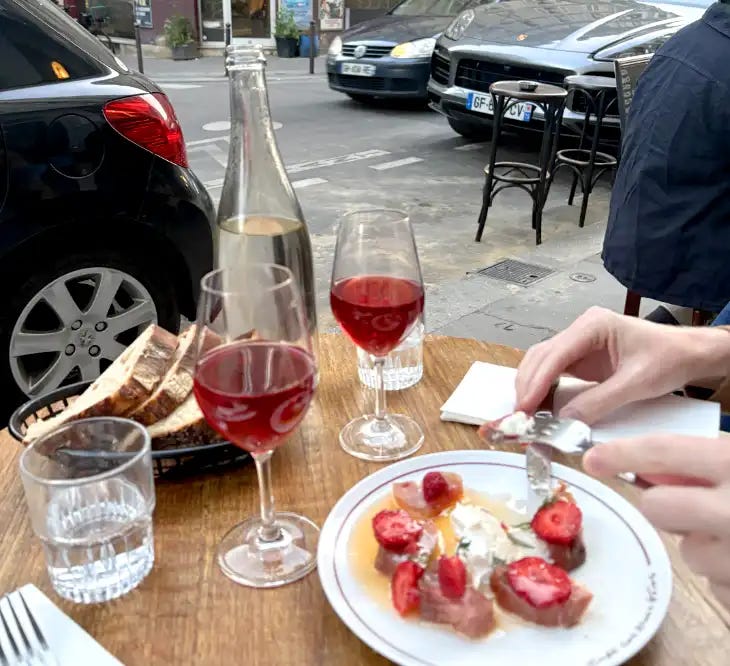
The crowds flocking to new wine bars and niche wine shops do not just reflect superficial trends, but rather a new golden era of eccentric French wine-making that coexists with the wider decline in the commercial wine industry, according to the author and wine critic Alicia Dorey.
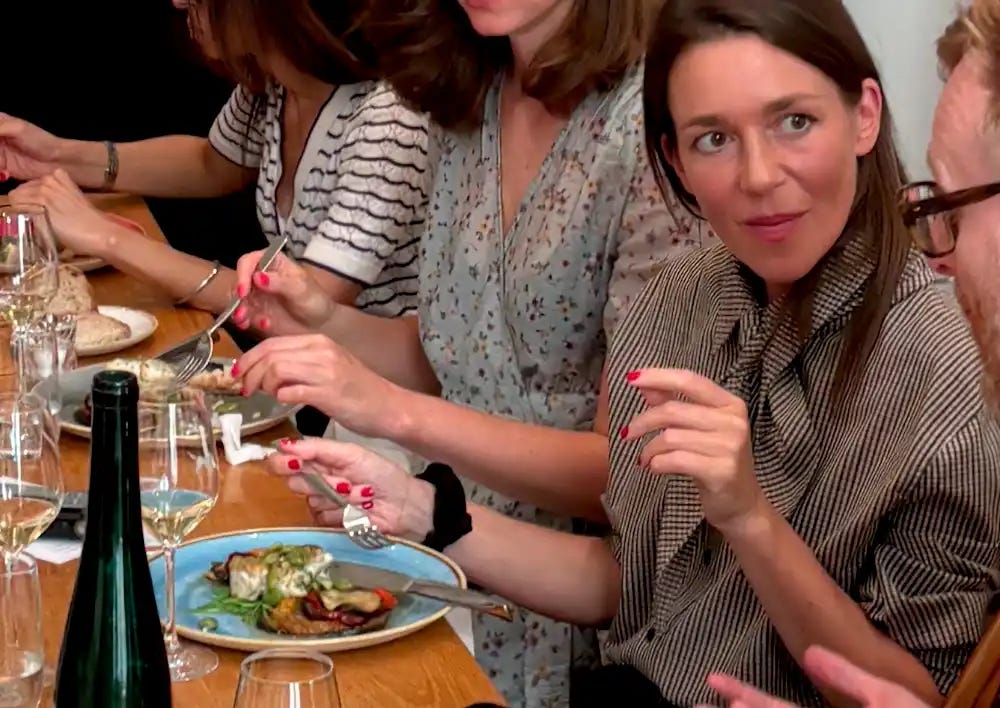
“I think there has never been a better time to drink wine in France,” Dorey says when we meet at Willi’s Wine Bar in central Paris to make sense of these contradictions.
Dorey does not deny that the challenges facing the current wine industry are real. Overall, domestic wine consumption in France has nearly halved, from more than 40 million hectolitres in the 1970s to about 24 million now, according to the International Organisation of Vine and Wine. To address shrinking demand and overproduction, the French government has begun to permanently uproot more than 80,000 acres nationwide, with Bordeaux wineries representing almost half. Growers receive a grant per hectare with no replanting allowed for at least six years.
The Champagne region is in its third straight year of decline, and in Bordeaux, global exports have plummeted. More than 100,000 jobs could be at risk, according to FranceAgriMer. Why has overall demand fallen?
Consumer Tastes are Changing
Dorey mentions a generational change in which young people today are more concerned with the health effects of drinking alcohol. The heavy reds of Bordeaux have been hit particularly hard by this consumer shift. But there are also global factors involved. Internationally, wine consumption fell to a 60-year low in 2024.
For many decades, China was a major buyer of expensive Bordeaux and Burgundy. But since the country launched a big nationwide anti-corruption campaign, many local officials, once the biggest spenders on French legacy estates, tend now to be in jail or relieved of their expense accounts. According to Wine Spectator, Bordeaux exports to China have fallen from 72 million cases to under 22 million in just a few years.
The globalization of the premium wine market has also exposed French legacy producers to more international competition, where great wines can often be found for lower prices. But much of the decline in French domestic drinking is also due to the fact that wine is no longer drunk like water at the French dining table.
People are more likely to make informed decisions on what to drink now, and this hurts the mass producers of cheap box wines in Bordeaux or Provence, while it actually helps many of the artisan wine makers who work with integrity and passion to create unique wines with strong personalities. In a way, Dorey suggests, we are seeing a shift from quantity to quality.
This can result in a number of increasingly absurd contradictions in French wine culture. While legacy wineries in Bordeaux and Champagne suffer through existential crises, cult winemakers and distributors in Bourgogne and Loire can “drive around in Lamborghinis,” says Dorey. Their sales have grown in tandem with increased demand from wine nerds in Tokyo, Copenhagen, and California, who crave sought-after natural wines from makers like Overnoy and Ganevat over legacy brands.
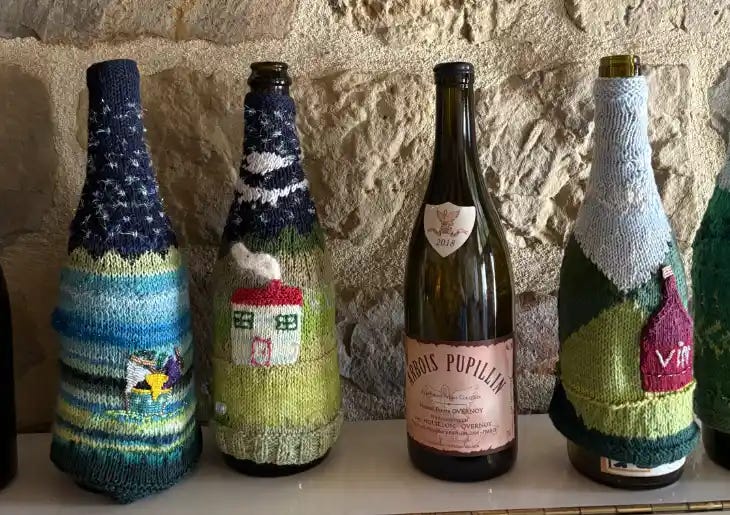
The shift is also visible in domestic wine auctions. Whereas organic and biodynamic wines make up only two percent of French wine production, they now account for almost a third of sales at French auctions, according to iDealwine’s Auction Barometer. This shift in demand has not just changed the progressive wine bars of eastern Paris but also many legacy institutions around the country.
Funky vs Conventional
“At one point, you had this huge split between very extreme, funky, natural wine and the very conventional ones with a lot of chemicals and chaptalization [added sugar to increase the alcohol content],” Dorey continues. “But now, there is a kind of convergence between the two worlds. The funky wines understand that they might need to make more straight, clean wines, as people become more knowledgeable about wine. But the most conservative, conventional wine makers also understand that chemicals and pesticides are not the future.”
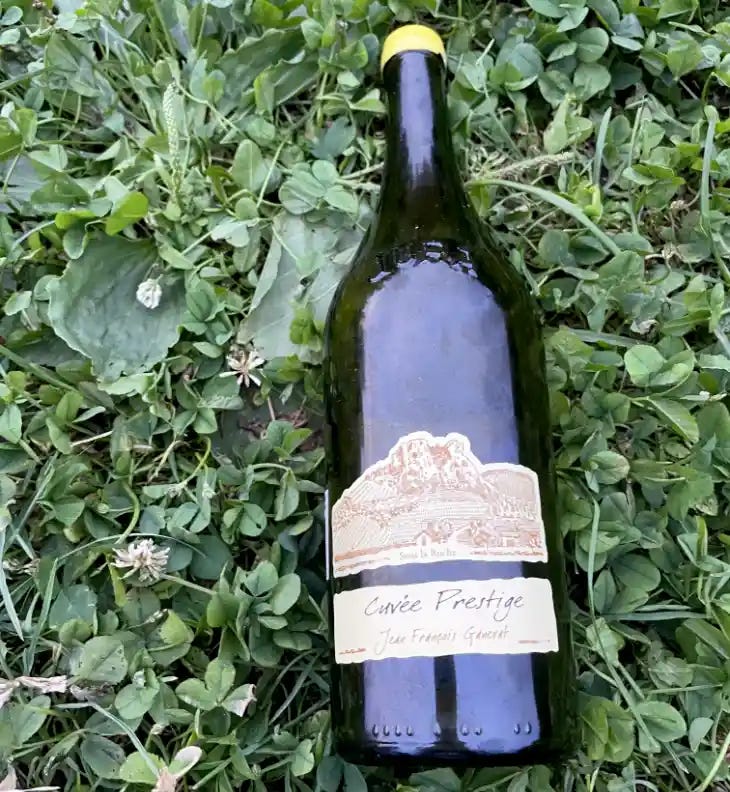
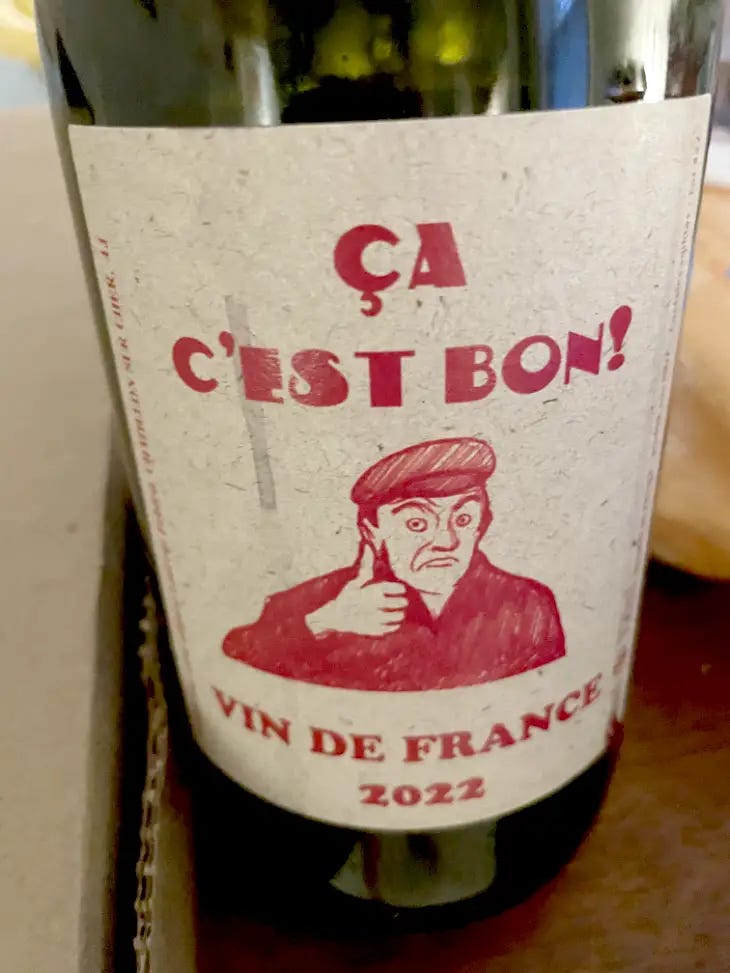
This is noticeable in many of the more renowned restaurants and wine cellars in Paris, where sommeliers have embraced more radical, organic wines.
“There is a new generation of sommelier now,” Dorey explains. “For instance, the sommelier of Le Bristol – they have a huge wine list – and when he arrived, he said, ‘Oh, in 10 years, half of the cellar will be natural wines.’ But he knows that it’s not like funky people at Le Bristol, so he has very straightforward, very delicate, nice natural wines.”
Americans also play a surprisingly benevolent role in this shift, Dorey says. While you can still find the stereotypical, culturally ignorant American tourist in certain parts of Paris, the city also attracts an increasing amount of well-informed American consumers who deliberately seek out progressive, ambitious wine bars, far from the obvious tourist traps.
The owner of a popular wine-focused restaurant in Belleville tells me that whenever someone calls to make a reservation several weeks in advance, she assumes they are Americans. Parisians tend to be more spontaneous with their dining choices, whereas an increasing number of American visitors plan their entire trips around wine cellars, choosing hotels based on the neighborhood dining and drinking scene.
These customers don’t just bring much-needed revenue to more adventurous wine makers in France, they increasingly shape the currents of the whole wine market. Knowledgeable and passionate American wine nerds have already reshaped the wine culture in New York and California to a point where they also shape the trends for the French wine scene.
“I visit New York at least twice a year, and the wine culture there is just amazing now,” adds Dorey. “They increasingly set the trends that arrive in France one or two years later.”
Thomas Jefferson and French Wine
Of course, the American love affair with French wine goes back to the dawn of the founding of their republics.
The famously francophile Thomas Jefferson sustained an extensive correspondence with French wineries, including the esteemed Beaune wine merchant Étienne Parent, who guided him through Burgundy and became his personal wine buyer. After serving as the minister to France in 1785-1789, Jefferson became particularly fond of Meursault and Montrachet, Chambertin, and Volnay. He personally visited many of the venerable Bordeaux wineries and often kept cases of Château d’Yquem in his cellar at Monticello, non-controversially calling it “the best white wine of France.” At one point, Jefferson ordered 250 bottles of the allegedly great 1784 vintage.
The convivial Benjamin Franklin fittingly preferred champagne and sparkling Mousseux, and once wrote, possibly after a couple of glasses, that every rainfall over the vineyards of France was “a constant proof that God loves us, and loves to see us happy.”
