

VENICE: Dissuading Day-Trippers
Population: 249,000 in Veneto region (less than 50,000 in center)

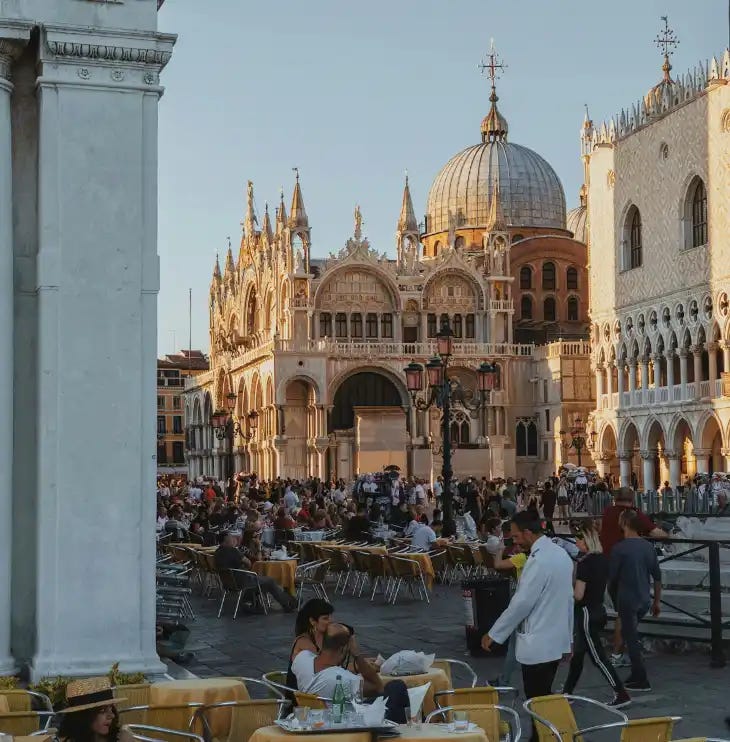
Dating back to medieval times, this tiny city, situated between the Adriatic Sea and a lagoon, boasts 177 canals, 118 islands, and 354 bridges, according to Venezia Tourism. It is also home to a unique but fragile ecosystem. Overtourism is a threat to the city of Venice, the locals, and Mother Nature.
With up to 30 million visitors a year, according to some estimates, this figure dwarfs the tiny population of Venice. Consequently, the city administration is tackling overtourism head-on, with measures aimed at controlling crowds, dissuading day-trippers, and raising money to cover the cost of visitor services.
Access Fees
In 2024, in a move to discourage hit-and-run tourism, Venice began levying an access fee for visitors on peak days. Applying to anyone over the age of 14 who enters the historic center without staying overnight (with a few notable exceptions), the fee is:
€5 if booked in advance.
€10 for last-minute bookings.
Hotel guests are not subject to the entrance fee, as they pay tourist taxes on their hotel stays.
However, the entrance fees apply only on selected high-traffic days – mainly spring and summer weekends – rather than throughout the high tourist season. The city claims they pay for additional services required to handle mass tourism.
On these designated days, all visitors, including hotel guests, must obtain a QR code showing that they have either paid a day fee or are staying at a hotel. This code can be checked at entry points and on demand in the city.
Results so far show only a modest reduction in visitor numbers, possibly because the rollout and enforcement of the new fees have been bumpy and unclear. Critics argue that the fees are too low to deter most tourists and that the city remains crowded on peak days.
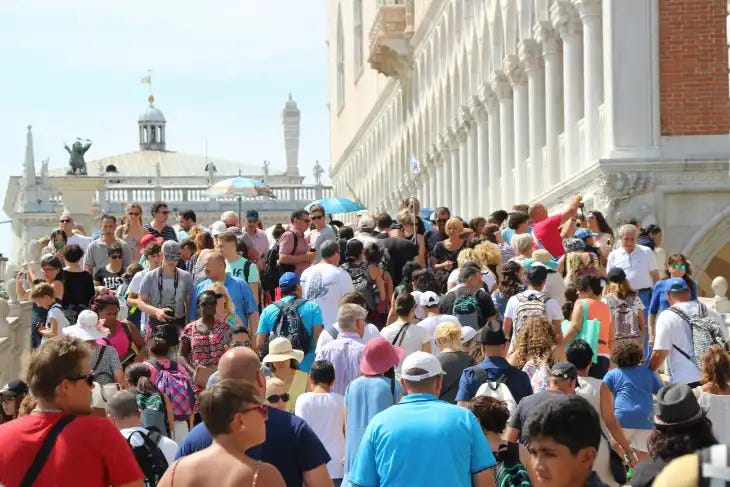
Restricting Loud, Large Tourist Groups
Some of Venice’s ancient calles (streets) are so small they can accommodate just four to five people across. Venice now regulates pedestrian traffic jams to reduce congestion, improve the flow of people, and reduce disruption for residents:
Tour groups are limited to 25 people.
Tour guides are prohibited from using loudspeakers.
Fines can be issued for violations.
Limiting Cruise Ships
Large cruise ships were long criticized for damaging the lagoon ecosystem and flooding Venice with day trippers who deposited more trash than money in the city.
Since 2021, the largest cruise ships have been barred from docking in Venice’s historic center and now anchor at designated terminals. For example, the San Basilio Terminal, not far from the Venice center, handles smaller ships; larger cruise lines dock at ports farther out, near Marghera.
This is considered one of the most significant structural changes to Venice’s tourism model.
Monitoring Visitor Flows
The city’s QR-code visitor registration can track and manage tourist movements, providing data that should anticipate overcrowding and manage services more effectively.
But visitor numbers remain extremely high. Residents’ groups say deeper reforms – such as tighter regulation of short-term rentals and policies to encourage people to live in the historic center – are needed. The challenge is that demand to visit the city remains extraordinarily strong.
Honestly, Venice should charge more. People treat it like Disneyland rather than the very small town it is.