

What the Sun King Could Teach Donald Trump
All leaders have a healthy dose of ego. The good ones know how to keep it in check while going about their business.

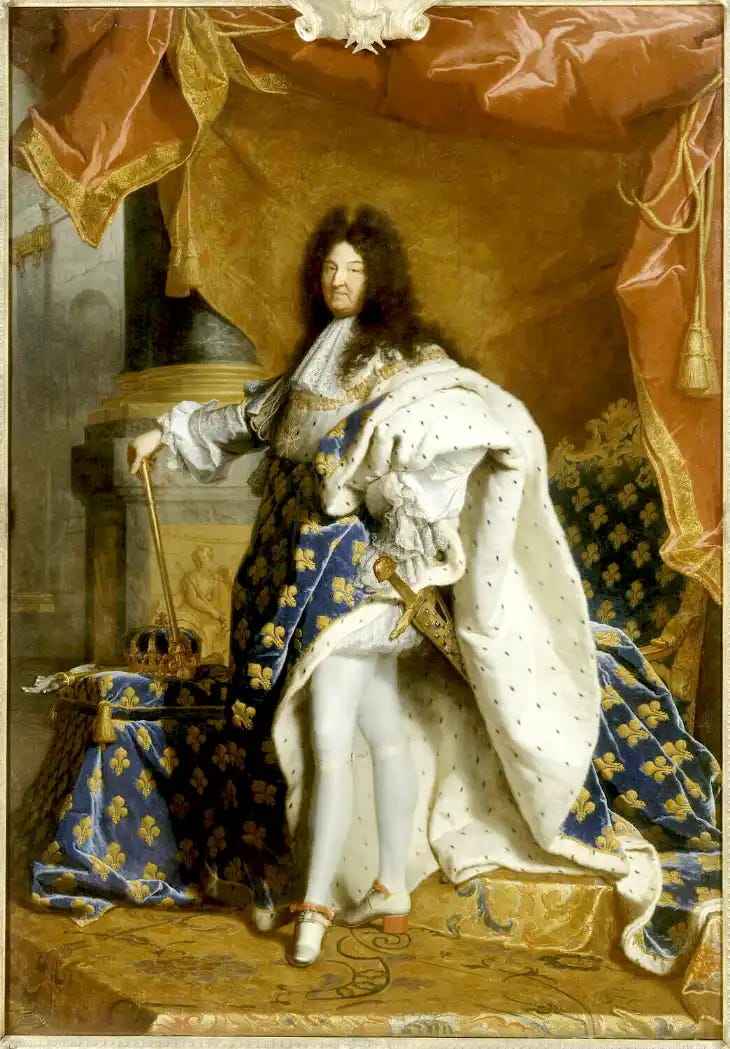
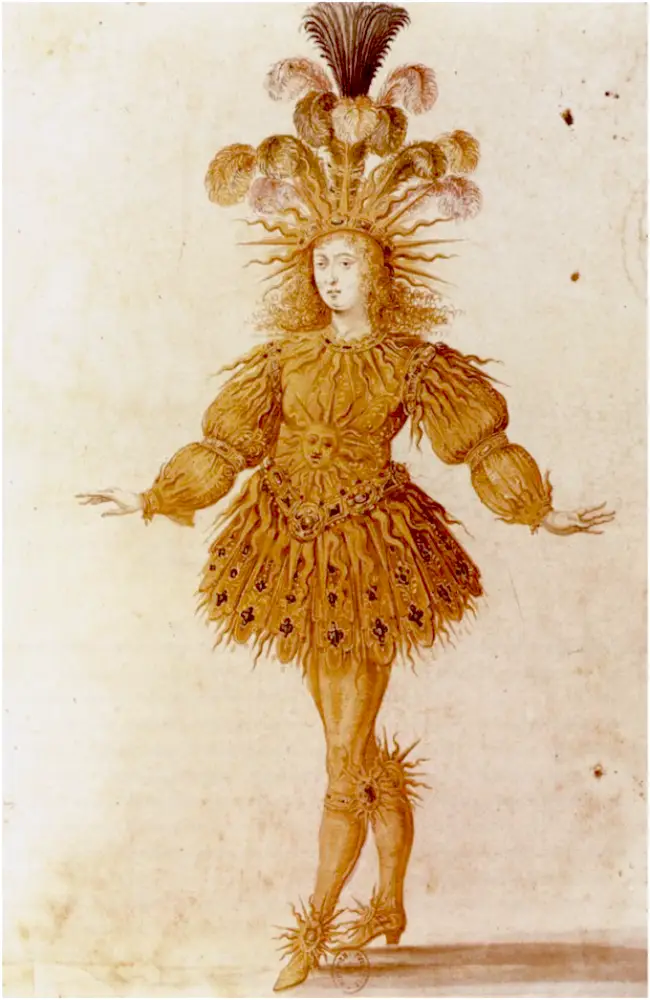
Louis XIV’s personal motto gives you a clue as to the size of this leader’s self-importance: “Nec pluribus impar” (“None his equal”). Imagine this phrase accompanied by his emblem, the Sun King (derived from a role he played in a ballet created expressly for him by Jean-Baptiste Lully). There was no ignoring this king, despite the lack of Truth Social media in the 17th century.
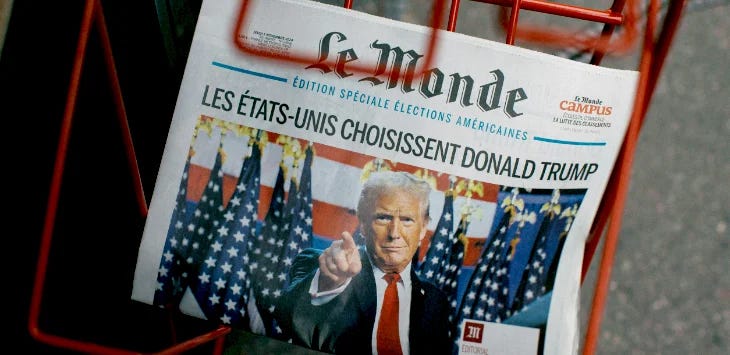
Even his own courtiers wrote that “Louis XIV’s vanity was without limit or restraint.” It’s hard not to make the comparison with a pretty intimidating, egomaniacal, shiny gold-festooned persona that exists in at least one world capital today.
Spoiled at Birth
Louis’ feelings of entitlement went back to his early childhood. His father (Louis XIII) died when he was just shy of his fifth birthday, leaving the lad to succeed as King of France, cossetted by his mother, Anne of Austria (who was nonetheless Spanish), and who acted as regent in concert with the intrepid and intimidating Cardinal Mazarin, an Italian. Thus, not only was Louis convinced of his mortal right to rule from a very young age, he sincerely believed that right was God-given and backed it up with doctrines carefully constructed by a leading bishop of the 17th century, Jacques-Bénigne Bossuet. Today’s democracies must navigate a series of courts and religious groups to approach the same results.
The apple of his mother’s eye, holder of impressive real estate throughout the country, and surrounded by a sycophantic court, the 22-year-old took the reins of French government upon the death of Cardinal Mazarin in 1661. Louis had become somewhat insufferable, hellbent on winning at all costs. James A. Nathan, writing in Force, Order, and Diplomacy in the Age of Louis XIV, nicely sums up Louis’ egotistical approach to deal-making: “Louis’ single-minded search for advantage was so raw, unencumbered, and bellicose that even in the ethos of the times it was unique.” His arrogance (one could call it “France First”) went a long way to making enemies of his neighbors across the borders, whom history tells us viewed the French king with both fear and contempt.
But Louis was not a buffoon who ranted through the night, hurling food at the walls in fits of rage in those days before social media provided unfettered direct communication with the public. Louis exhibited a sense of self-awareness not just personally but in his role as a leader. Courtiers of that time claimed they never saw Louis lose his temper in public – and fewer than ten times in private. For someone who ruled for 70 years straight, this is a pretty good track record by any measure.
He also took pains to ensure the dignity of his office would live on, leaving advice in his memoirs: “A bloody and ferocious temper is despicable in a man, and beneath the dignity of a king.”
Louis knew how to use both his mouth and his ears when appearing in public, as courtier Saint-Simon wrote of the king’s appearances: “He had the ability to speak well and to listen with quick comprehension, with much reserve of manner … always dignified, always distinguished.” An appraisal that might be considered today as the equivalent of “stable genius.” But according to another courtier, Louis also knew when to keep his mouth shut: “He knew how every word a monarch utters is canvassed over in public.”
Limelight and Limits
And for all his love of the limelight, even Louis had his limits. “The more facility I have as king to glorify myself, the more I ought to be on my guard,” Louis cautioned his son, admonishing him to “avoid the empty noise of applause, which is incessantly flattering.” Even the Sun King understood the importance of acknowledging dissenting voices.
While Louis XIV believed in the divine right of kings to rule, he understood that this right derived from the ancient and fundamental law of succession. As head of state, Louis was the interpreter of the law and oversaw the meting out of justice in the French state, upholding and respecting the many rights to which his subjects were entitled – even under an absolute monarch.
And he was indeed absolute: on April 13, 1655, at the tender age of 16, shortly after reaching the “majority” or legal age of succession in France, Louis reshuffled his government. He kept Mazarin but dismissed most of his other ministers and declared, perhaps apocryphally, before the French Parliament, “L’État, c’est moi” (“the state is me”). Parallels could be drawn between this proclamation and that of today’s US Supreme Court regarding presidential power; however, court memoirs from the 17th and 18th centuries attest to the prodigious working hours put in by Louis XIV, who, as far as is known, did not play golf.
While Louis may have considered himself a living legend, he nevertheless understood that the country he ruled was more important than its ruler, telling those who attended him on his deathbed, “I depart, but the state remains.”
In other words, in the end, recognizing the human limits of power, Louis came to understand his leadership responsibilities superseded his need for ego aggrandizement. Though there is still Versailles, of course.
