


One of the dangers of contemporary hard-power nationalism is that it carries significant consequences beyond national borders. An increasing number of authoritarian regimes are pursuing policies that spark new wars, violent conflicts, and global chaos. As international democracy weakened over the past decade, news reports suggest the number of wars doubled.
It would be reasonable for democratic governments, in these turbulent times, to increase spending on diplomacy, peacekeeping, and aid work. Instead, the opposite is happening.
Fallacy of Hard Power
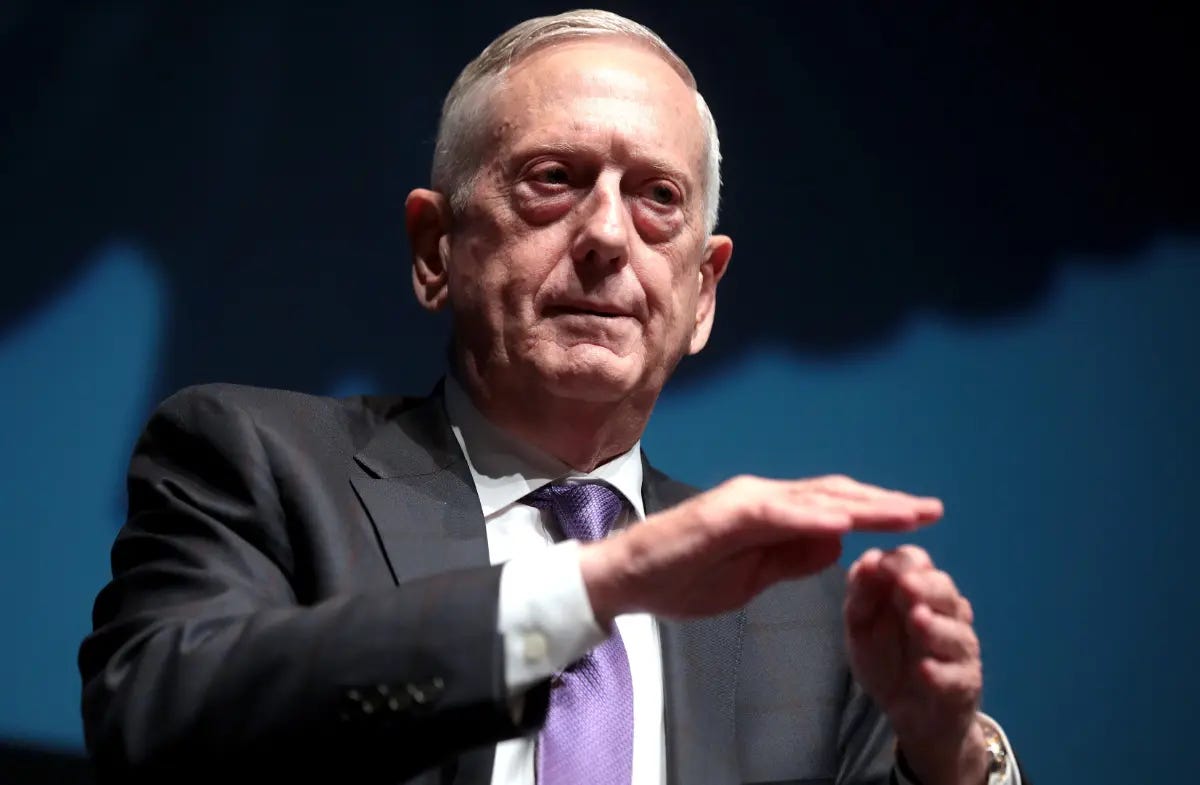
During the first Trump administration, Jim Mattis, then US Secretary of Defense, warned that gutting diplomacy and aid means that “even more will have to be spent on ammunition.” In short, every dollar saved on aid and diplomacy will be spent on new wars.
Mattis is proven right as nationalist governments gut global aid and curb diplomatic efforts, peacekeeping, and democracy-promoting initiatives, citing “domestic pressures,” while doing so creates humanitarian crises that increase the risk of new conflicts.
The British medical journal The Lancet estimates that millions will die as a result of Donald Trump’s gutting of USAID, one of the world’s largest national aid programs. The war in Iran has caused a new spike in oil prices, resulting in broader inflation and the threat of global recession – potentially triggering additional wars.
Europe Imitates Trump
It’s not just Washington; across Europe’s wealthy nations, similar cuts are happening. Recently, the acting head of the UN’s World Food Programme, Carl Skau, traveled through Europe meeting with EU leaders to underscore the importance of continuing their own global aid at a time when an increasing number of European governments are following Trump’s lead. In Paris, following his visits to dozens of crisis zones, including Lebanon, Gaza, Yemen, Sudan, Haiti, Jamaica, and Ukraine, Skau spoke to the Anglo-American Press Association, relating stories of decreased staffing levels, depleted funds, and serious food shortages leading to a “perfect storm of humanitarian crises.”
The humanitarian arguments should be enough to convince governments to support diplomacy and aid work, but since they clearly have been insufficient, it is worth reminding governments that it is self-harm for democratic countries to cut diplomacy, aid, and global outreach during periods of increasing war and conflict. “A hungry world is an unstable world,” Skau says.
In hard times like the present, amplified by conflicts in Ukraine and Iran, it is tempting to view the entire arsenal of soft power as an unaffordable luxury. But Trump’s overall foreign policy reveals the flaws in a doctrine shaped by the idea that raw strength and hard power are all that matter.
“You can’t shoot values,” said Trump’s Secretary of Defense, Pete Hegseth, in a widely publicized speech in Germany, in early 2025. He meant that values and ideas cannot be used as ammunition, which makes them useless. But the statement had the opposite effect of what he intended.
There are No Real Winners in a Global Retreat from Soft Power
Only a year later, Trump struggled to find a single European government to support the US-Israel attack on Iran. A country perceived to be a bully rather than a reliable partner quickly loses its friends, making it significantly harder to manage setbacks and crises or ensure a stable future. Suddenly, values, trust, diplomacy, and relationship-building – soft power – do not seem so worthless.
At this precise moment, with a new world order emerging, to withdraw from global commitments and diplomatic obligations is strategically shortsighted. Such a retreat leaves the door wide open for autocratic regimes – be it China or the wealthy Gulf states – to step forward to fill the void in global leadership and cultural influence left by the US.
“There are no real winners in a global retreat from soft power. Not the United States. Not its allies. Not even its competitors,” writes Vivian Walker, PhD, an American diplomat and adjunct professor at Georgetown University in Washington, DC. “A world in which strategies of persuasion are eclipsed by an over-reliance on threat and aggression is a world that is more volatile, less predictable, and ultimately less secure for all.”
Brute Force May Work – Until it Doesn’t
It’s wishful thinking to believe that idealism alone will motivate countries to do good. Twelve years ago, one of the leading thinkers on public diplomacy, Simon Anholt, launched The Good Country Index, a new way to measure a country’s positive influence across the globe. Anholt advocated for relationship-building and aid, not just because it is good for humanity, but also because it promotes the core mission of every competent government: the security of its domestic population.
“The US didn’t spend billions on aid for Germany, Japan, and Italy after the [Second World War] because they were so ‘good.’ They did it because it was good for them,” Anholt said at the time.
He developed a motto that he tried, with mixed success, to get various governments to implement: “In order to do well, you need to do good.” The point is that countries wishing to create prosperity and security must also help others.
For middle powers, such as France, Canada, the UK, Japan, or South Korea, relationship-building and soft power only become more important in hard times.
For major global powers, such as America and China, a doctrine of brute force may work – until it doesn’t. Trump’s isolation on the foreign stage vividly illustrates this: what made America so powerful in the last century were not just domestic strengths but foreign allies.
